
6 Strategies for Better Performance and Development Conversations
Jan 09, 2020
Last updated: August 21, 2026
As a people manager, the conversations you have with your team about how they're doing and where they're headed are some of the most consequential things you do, and also some of the most botched. Most performance and development conversations leave both people in the room unsatisfied, not because either side lacks good intentions, but because almost nobody plans for them the way they'd plan for anything else that mattered this much.
Prior planning prevents poor performance. It's a tired maxim, but it happens to be exactly true here. So what should you actually plan?
1. Prepare the behaviors, not just the topic
When someone has a clear goal and feels genuinely motivated to reach it, their brain rewards goal-directed behavior with small hits of dopamine, and that reward gets stronger when the behavior is noticed and acknowledged by someone else. That's not a soft observation; it's the mechanism the rest of this conversation runs on.
Before you sit down with someone, be specific about which goal you're discussing and which behaviors you've actually observed, not just your general impression of how things are going. Values are inferred and easy to argue about. Behaviors are observable, and observable is what makes a conversation productive instead of defensive.
2. Bring unconditional positive regard, not just an agenda
Preparing your observations matters. Preparing your mindset matters just as much. A manager's positive or negative bias upon entering the room measurably shapes the other person's performance afterward.
Unconditional positive regard, UPR, means respecting the person's capacity to choose how they respond to their own situation, regardless of how the conversation is about to go. I've written a full piece on what UPR actually requires under real pressure, including why it collapses the moment you're performing calm rather than feeling it: "Why Love Is the Secret for Feedback and Growth." The short version for this conversation: however it's going, the person in front of you can still choose to improve, and your regard for them shouldn't be conditional on today's numbers.
3. Start with a question, not a verdict
Most people have a reasonably accurate sense of how they're tracking against a goal, and if someone doesn't, that's exactly the thing you need to surface early. Opening with something like "how do you think you're progressing toward the target?" does two things at once: it opens the conversation genuinely, and it tells you immediately whether you're both looking at the same reality before you've said a word of your own assessment.
4. Give feedback, not criticism: Fact, Impact, Future
Effective feedback lets someone confirm what's working and adjust what isn't. Criticism just tells them they're wrong. The formula that keeps the two apart is Fact, Impact, Future: state the observable fact, invite them to consider its impact, then agree together on what changes going forward.
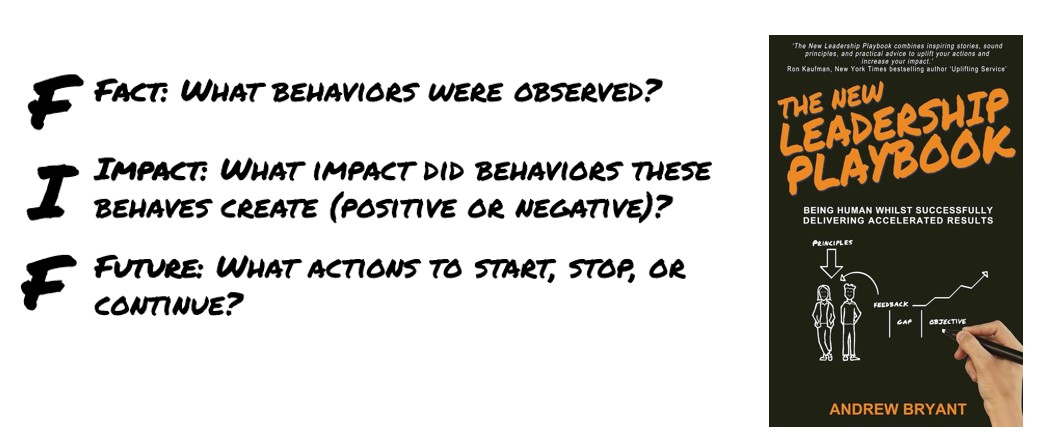
This only works if step one (the behaviors) and step two (UPR) are already in place. Fact-Impact-Future delivered without genuine regard for the person just becomes a more polished version of criticism, and people can generally tell the difference.
5. Co-create the next target, don't assign it
People commit harder to goals they helped set. Ask directly: "What would a real stretch look like for you next quarter?" You may need to nudge the ambition up or add direction, but the goal should still land as theirs, not yours, if you want the follow-through to hold.
Once you've landed on it, get specific about which behaviors will actually move them there, and be clear about what support and accountability you're offering, not just the target itself.
6. Be a people leader, not just a manager
As a manager, you're naturally biased toward whatever gets you to your own objectives. As a people leader, part of your attention has to go toward what this person actually wants for their career, even the parts that don't directly benefit you. Show real interest in their aspirations. Notice who you could connect them with. That's the difference between managing someone's output and actually leaving a legacy in how they grew.
Frequently Asked Questions
What is the Fact-Impact-Future feedback model?
A three-step structure for giving feedback without it landing as criticism: state the observable fact, invite the person to consider its impact, then agree together on what changes going forward. It keeps the conversation anchored to specific behavior instead of general judgment.
How do I give feedback without it feeling like criticism?
Separate the observation from the verdict. State what actually happened (the fact), let the person weigh in on what it affected (the impact), and turn the conversation toward what happens next (the future) rather than dwelling on blame. This only lands well if it's paired with genuine unconditional positive regard for the person; the same words delivered with real regard versus irritation produce very different conversations.
What is unconditional positive regard in a performance conversation?
It means respecting someone's capacity to choose how they respond to their own situation, and holding that regard steady regardless of how well or badly they're currently performing. It's the mindset you prepare going into the conversation, alongside the specific behaviors you've observed.
How do you start a development conversation?
With a genuine question rather than your own assessment, something like "how do you think you're progressing toward the goal?" Most people already have a fairly accurate read on their own performance, and starting there tells you immediately whether you're both seeing the same situation.
How do you set goals in a performance conversation so they actually stick?
Ask the person what a real stretch goal would look like for them, rather than handing one down. People follow through more reliably on goals they helped shape. Add direction or ambition where it's genuinely needed, but let the ownership stay with them.
Further Reading for Better Performance Conversations
I wrote a practical handbook for every performance and development conversation you'll need to have, The New Leadership Playbook.
It contains my experience working with executive leadership teams, executives, and HR and L&D leaders.
Staying level enough to actually run a performance conversation well, when the stakes are high, is its own skill, and it's covered in Why Willpower Isn't the Answer to Self-Regulation. And if the conversation you're dreading is specifically about a mistake someone made, How to Manage Employee Mistakes Effectively applies this same Fact-Impact-Future logic to that exact situation.
Turn Insight Into ActionReading about leadership can change what you know.Self-leadership changes what you do.Develop your leadership effectiveness → Explore Self-leadership Discover your leadership strengths & gaps → Choose an Executive Coach Unlock the potential of your team → Workshops & Masterclasses Ignite your event or conference → Book Andrew Bryant as your Leadership Speaker "Prescription without diagnosis is malpractice" |