Is Self-leadership Modern Stoicism for Success?
Apr 03, 2024
Last updated: September 3, 2026
Stoicism is an ancient Greek philosophy, founded by Zeno of Citium around 300 BC, built on the idea that a well-lived life comes from practicing four virtues: wisdom, courage, moderation, and justice. Its central teaching is that we can't control external events, only our judgments and reactions to them.
Far from being a thing of the past, that idea is as relevant today as it ever was. In an era of disinformation, we need sharper critical thinking. As AI takes over more cognitive work, we need more clarity on what it actually takes to be human. Integrating stoicism with self-leadership is one of the more useful upgrades you can make to how you operate under pressure.
The First Stoic
Zeno of Citium, in modern-day Cyprus, was the first Stoic philosopher. He shared his ideas for a path to a well-lived life near the end of the 4th century BC.
Zeno himself lived a life far removed from what we'd call success today. Shunning possessions and living unwashed in the street, he'd be considered a lunatic by today's standards.
Zeno and the later, more famous Stoics, Epictetus, Seneca, and Marcus Aurelius, believed the practice of four virtues, wisdom, courage, moderation, and justice, was required to achieve eudaimonia: a well-lived life.
Like stoicism, self-leadership is a practice. It is the practice of intentionally influencing your thinking, feelings, and actions toward your objectives (Bryant and Kazan, 2012).
Stoicism provides a philosophical foundation that emphasizes endurance, temperance, and the pursuit of wisdom. Self-leadership builds on these virtues, focusing on practical strategies for self-awareness, self-regulation, self-motivation, and learning.
Self-Awareness and the Power of Perception

Epictetus, a former slave turned stoic philosopher, famously said:
"It's not what happens to you, but how you react to it that matters."
This quote captures the Stoic belief in focusing on our responses to external events rather than the events themselves. Epictetus's teachings highlight the significance of perception and the role it plays in our happiness and resilience.
Developing self-awareness is a pillar of self-leadership. We have to learn to catch our reactions to things and examine our own perceptions and biases.
We are all dealt a hand of cards, but it's not the cards, it's how we play them that determines our success.
Stoic Leadership and Self-Regulation
Marcus Aurelius, a Roman Emperor and Stoic philosopher, wrote meditations that serve as personal reminders of Stoic philosophy, including:
"You have power over your mind, not outside events. Realize this, and you will find strength."
Aurelius's words point to the importance of self-regulation, or self-discipline. This is the core of what stoic leadership actually means in practice: not stoic in the popular sense of suppressing emotion, but leading from the discipline of separating what you can control from what you can't.
By governing our thoughts and actions, and choosing our internal narratives, we maintain tranquility and effectiveness even in the face of adversity. Self-leaders are more effective, efficient, and resilient than those who don't practice self-regulation. Self-regulation is the fuel for personal power.
Stoicism Under Real Pressure: The Stockdale Paradox
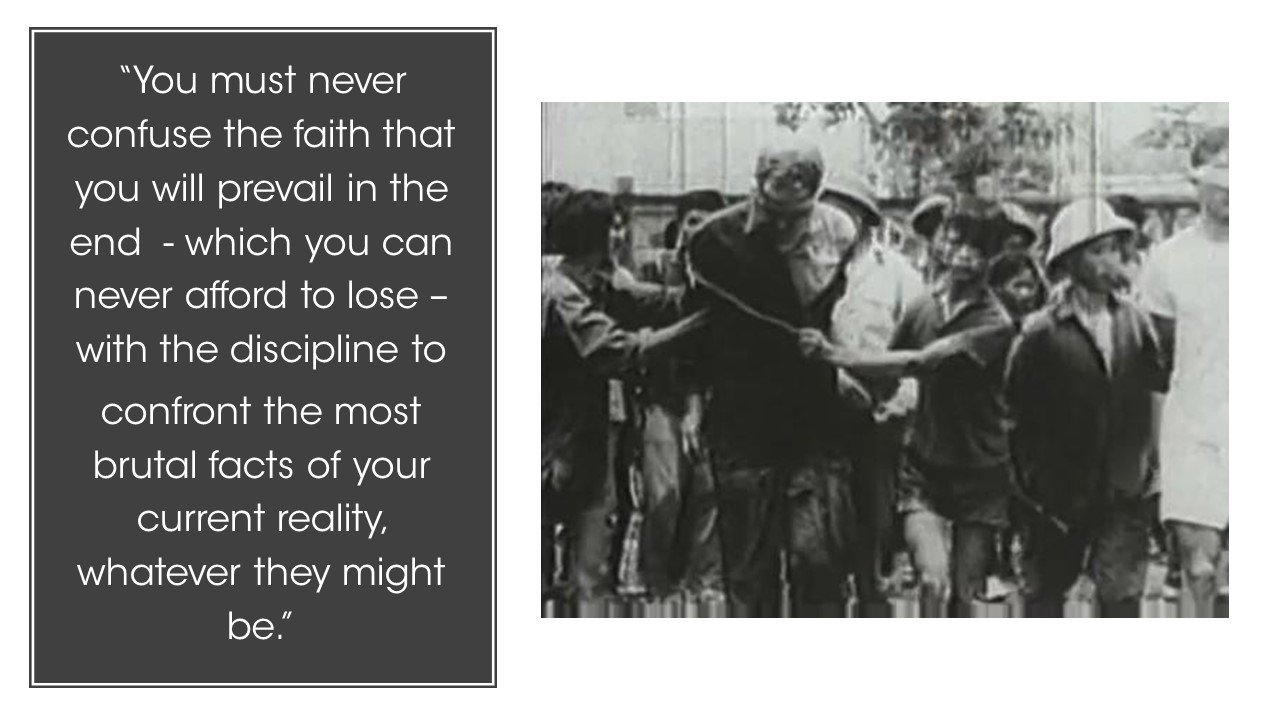
Admiral James Stockdale is probably the closest thing Stoicism has to a stress test. Stockdale studied Epictetus at Stanford before he was shot down over Vietnam in 1965, and as he ejected from his plane, he later said he told himself he was leaving the world of technology and entering the world of Epictetus. He spent seven and a half years as a prisoner of war in the Hanoi Hilton, and he credited that Stoic training, not optimism, with keeping him alive.
Business writer Jim Collins interviewed Stockdale for his book Good to Great and asked him who didn't make it out. Stockdale's answer became known as the Stockdale Paradox:
Hold onto an unshakeable faith that you will prevail in the end, while at the same time forcing yourself to face the most brutal facts of your current reality.
In Stockdale's account, the prisoners who struggled most were the pure optimists, the ones who pinned their hope to a release date. When that date came and went, they lost a little more of themselves each time.
That's Stoic self-regulation taken to its extreme: not blind positivity, and not despair, but the discipline to hold the facts and the faith at the same time. Most leaders will never face anything close to what Stockdale faced, but the same discipline scales down, to a market downturn, a failed launch, a difficult restructuring, any moment when the instinct is to either deny the situation or collapse into it.
The Value of Self-Learning
Seneca, another prominent Stoic philosopher, emphasized the preciousness of time:
"It is not that we have a short time to live, but that we waste a lot of it. Life is long enough, and a sufficiently generous amount has been given to us for the highest achievements if it were all well invested."
This encourages us to use our time wisely, focusing on what truly matters and contributes to our personal growth and well-being. In self-leadership, we call this self-learning: investing in becoming the best version of ourselves.
Defining Your Own Success
For the Stoics, success was a well-lived life. For self-leadership, it's becoming the best version of yourself. Both definitions are about being rather than doing, or having.
We certainly live in a material world, and the right school, house, car, and job are established markers of success, but cracks in this model are showing. The Great Resignation showed us that people are prepared to forgo corporate climbing for a more balanced life, and that new entrants to the workforce are looking for more meaningful work, development, and advancement.
Living a life of wisdom, courage, moderation, and justice now seems like a modern philosophy rather than an ancient one.
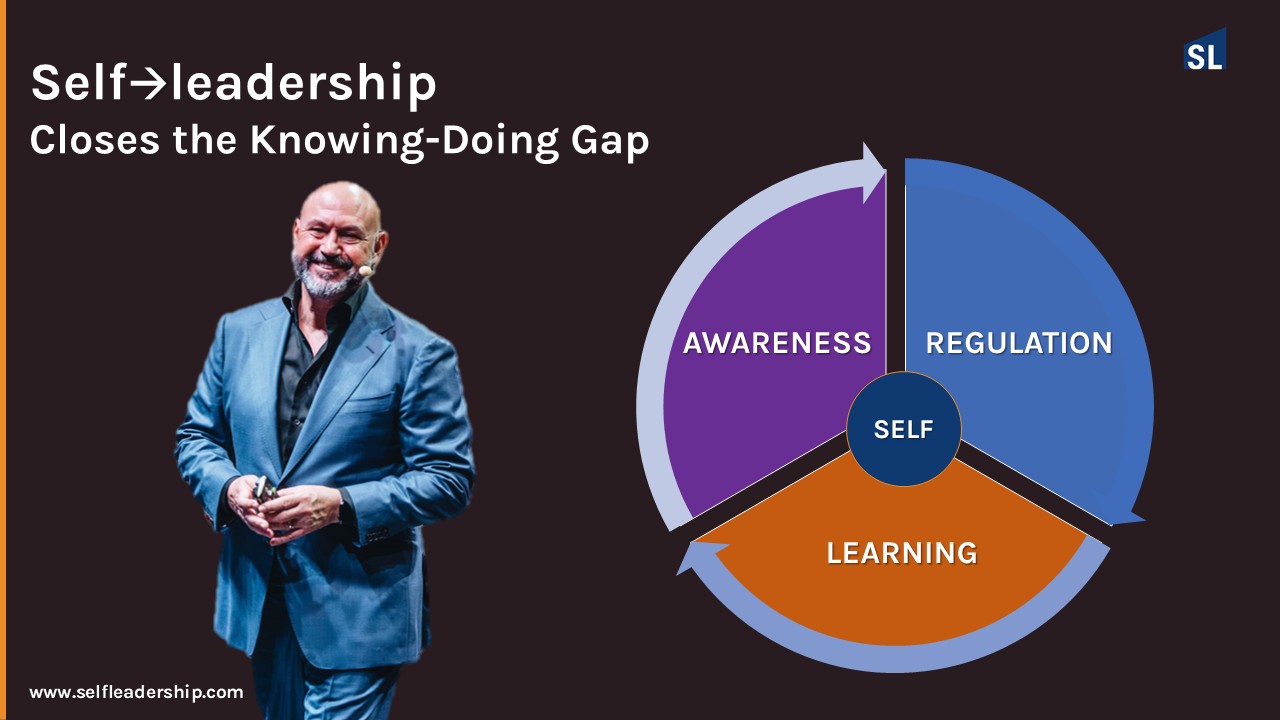
As a leadership speaker on self-leadership, I like to share Stoic philosophy with my audiences, and I bring the same thinking into one-to-one coaching with leaders who want to build Stoic-style composure under real pressure, not just read about it.
Frequently Asked Questions
What is stoicism?
Stoicism is an ancient Greek philosophy, founded by Zeno of Citium around 300 BC, built on the idea that a well-lived life comes from practicing four virtues: wisdom, courage, moderation, and justice. Its central teaching is that we can't control external events, only our judgments and reactions to them, and that lasting resilience comes from focusing our effort there.
What are the four Stoic virtues?
Wisdom, courage, moderation, and justice. The Stoics believed that practicing all four together, not just one in isolation, produced eudaimonia: a well-lived, flourishing life.
What does Stoic leadership mean?
Leading from the same core Stoic principle applied to a team: separating what you can control (your own judgment, effort, and response) from what you can't (market conditions, other people's decisions, outcomes), and building the self-regulation to stay effective under pressure instead of being reactive.
Who are the major Stoic philosophers?
Zeno of Citium founded the school around 300 BC. The three most influential later Stoics were Epictetus, a former slave who taught that our reactions matter more than events themselves; Seneca, a Roman statesman who wrote on the value of time; and Marcus Aurelius, the Roman emperor whose private journal became the Meditations.
How is self-leadership related to stoicism?
Stoicism supplies the philosophical foundation: endurance, temperance, and the pursuit of wisdom. Self-leadership builds on it with practical, teachable strategies for self-awareness, self-regulation, and self-learning. One is 2,300 years of philosophy; the other is a methodology for actually practicing it at work.
What is the Stockdale Paradox?
Named for Admiral James Stockdale, a Vietnam POW who credited Stoic philosophy with his survival, it's the discipline of never losing faith that you will prevail in the end while simultaneously confronting the most brutal facts of your current reality. Jim Collins named it after interviewing Stockdale for his book Good to Great.
Turn Insight Into ActionReading about leadership can change what you know.Self-leadership changes what you do.Develop your leadership effectiveness → Explore Self-leadership Discover your leadership strengths & gaps → Choose an Executive Coach Unlock the potential of your team → Workshops & Masterclasses Ignite your event or conference → Book Andrew Bryant as your Leadership Speaker "Prescription without diagnosis is malpractice" |