
Us vs. Them: How In-Group Bias Distorts Leadership Decisions
Jan 13, 2020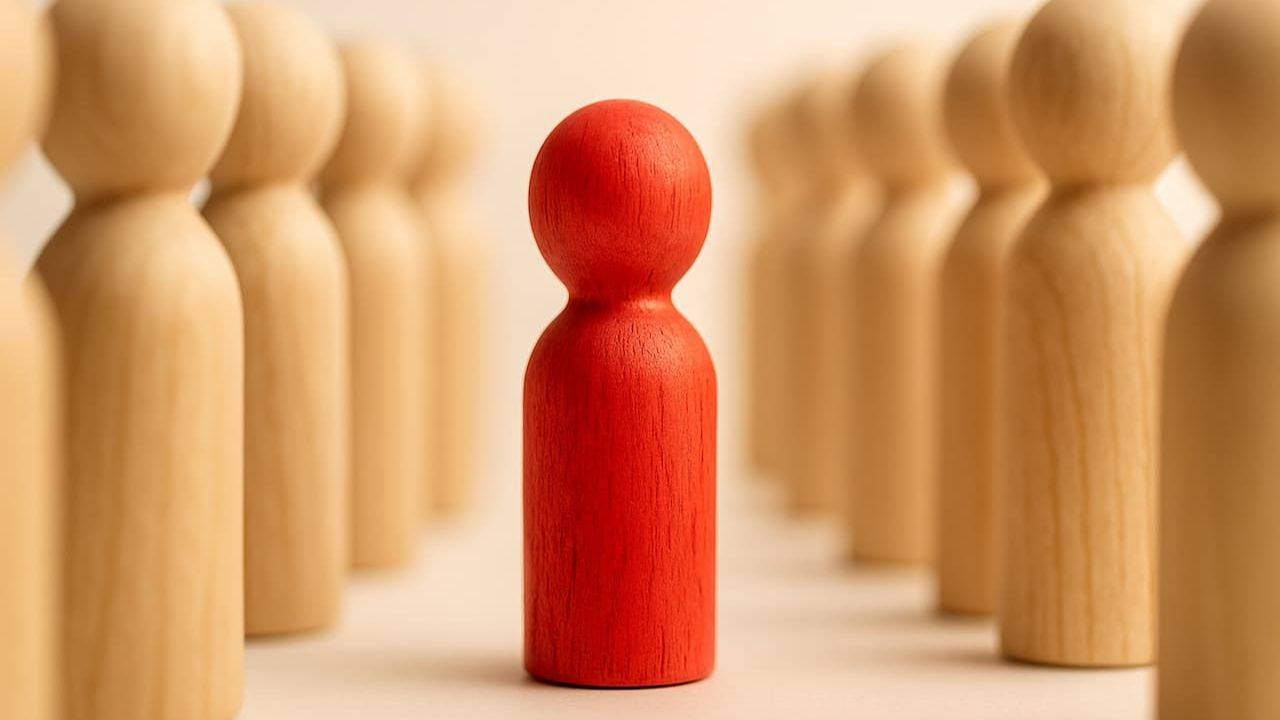
Last updated: September 3, 2026
A new VP joins from outside the company. Within a week, half the leadership team has quietly decided her ideas "aren't how we do things here." Meanwhile, a data point from another department gets waved off in a meeting, not because it's wrong, but because it came from "them," not "us."
Neither reaction has anything to do with the merit of the idea. Both are your brain doing exactly what it evolved to do: sorting people into a tribe before it evaluates a single fact.
Why your brain sorts people into "us" and "them"
In the 1970s, psychologist Henri Tajfel developed what's now called social identity theory. He found it took almost nothing for people to organize into groups, and once they did, they started treating outsiders worse almost immediately. In his experiments, people fell into us-versus-them thinking within seconds, often over distinctions so arbitrary they were functionally meaningless.
From an evolutionary standpoint, this made sense: spotting someone outside the tribe fast had real safety value, and our ancestors needed lightning-fast judgments about friend or foe. Daniel Kahneman, in Thinking, Fast and Slow, calls this System 1 Thinking: fast, instinctive, and emotional, as opposed to the slower, more deliberate System 2 Thinking. The problem is that our System 1 wiring runs at full strength in a modern org chart, where "outside the tribe" might just mean a different department, a different tenure, or a leader who joined last quarter.
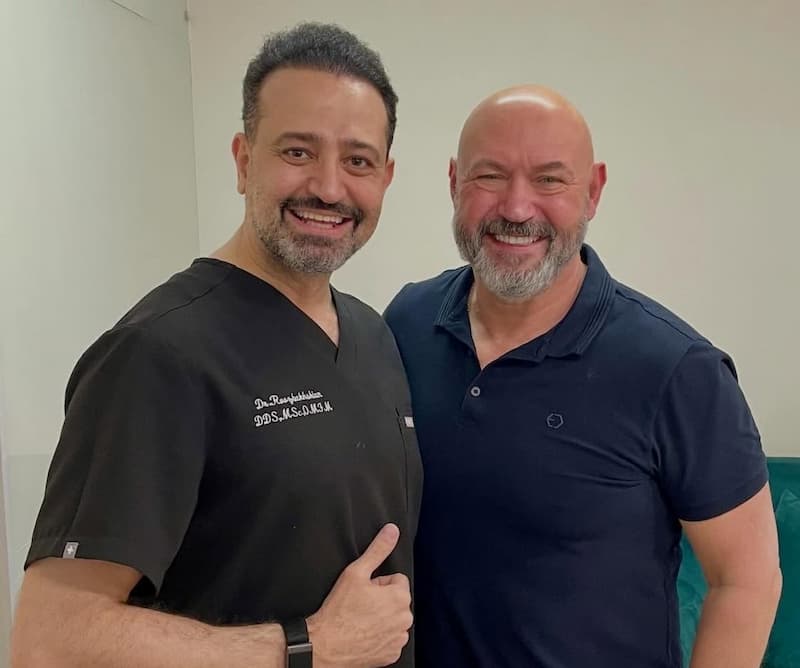
I noticed my own wiring do this in a waiting room, of all places. I needed emergency dental work after office hours, and took the first available appointment. Sitting there, I looked up at the name on the door; it was foreign to me, and I noticed a flicker of apprehension before I'd met the man. When he came out to greet me, his accent was pure London, and the apprehension dissolved instantly. Neither reaction had anything to do with whether he could actually do the job. He turned out to be excellent, and he's been my dentist ever since. People are not logical. They're psycho-logical, and catching that in yourself is the whole game.
How this shows up in leadership and teams
In-group bias rarely announces itself. It shows up as:
- Not-invented-here syndrome: a good idea gets dismissed or quietly reinvented because it came from another team
- New-leader discount: a leader hired from outside gets less benefit of the doubt than one promoted from within, regardless of track record
- Selective scrutiny: data from "our" team gets accepted at face value; the same quality of data from another team gets picked apart
- In-group favoritism in decisions: hiring, promotion, and resourcing choices that quietly favor people who feel like "one of us," independent of who's actually best suited
None of this requires anyone to be acting in bad faith. That's what makes it dangerous. The bias is a byproduct of normal cognition, and researchers, including Lilliana Mason and Dan Kahan, have found that once an issue or a person is tagged as belonging to an in-group or an out-group, people stop evaluating the substance and start reacting to the label instead.
The four ways your brain distorts a decision
In-group bias is a specific pattern within a much broader category: unconscious cognitive bias. Psychologists have cataloged well over a hundred distinct biases, but for a working leader, they mostly reduce to four root causes:
- How we remember: memories aren't a recording. How you recall something depends on how you emotionally coded it at the time, and what got added or dropped since.
- Too much information: overwhelmed by input, the brain defaults to whatever confirms what it already believes, or whatever was repeated, recent, or different enough to stand out.
- Not enough meaning: we fill gaps with our own stereotypes and simplify complexity to fit a worldview we already hold, including guessing at what other people are thinking.
- The need to act fast: under time pressure, the brain locks onto whatever's directly in front of it and skips the strategic step back.
Notice that in-group bias touches all four. It's a memory shortcut (we recall favorable things about "our" people more easily), a meaning shortcut (we assume competence or good intent based on group membership), and it gets worse under time pressure, exactly when a leader is least likely to catch it.
The antidote: self-awareness and critical thinking
You can't switch off the mechanism that produces in-group bias; it's too old and too automatic for that. What you can do is build the habit of catching it before it decides for you. That habit is self-leadership, specifically the self-awareness to notice the reaction and the critical thinking to check it. Three questions do most of the work:
"Where's the evidence?"
"In what context does this evidence actually hold true?"
"Would I find this just as convincing if it came from someone outside my team?"
That last question is the one that actually surfaces in-group bias, because it forces you to separate the source from the substance. If your answer changes depending on who's talking, that's the bias, not the evidence, doing the deciding.
Why this costs more than it looks like it does
Unconscious bias isn't just an interpersonal irritant; it shows up on the balance sheet. McKinsey's research on diversity has repeatedly found that gender, ethnic, and cultural diversity at the executive level correlates with financial performance across multiple countries, largely because more diverse companies attract stronger talent and make better decisions. Separately, McKinsey's research on the mindsets and skills that will matter most as work changes puts self-leadership and critical thinking at roughly half the list, with digital fluency and interpersonal skills making up the rest. As teams get more cross-functional and more distributed, the "us versus them" reflex has more opportunities to fire, not fewer, which makes catching it a genuine leadership skill rather than a nice-to-have.
As a leadership speaker and self-leadership coach, developing this exact combination, self-awareness paired with critical thinking, is a large part of my work with clients. I set an intention to check my own biases at the door before I engage an audience or a client, and it's a practice, not a one-time fix.
For practical tools to build your self-awareness, read Self-Awareness at Work: The Leadership Skill You Think You Have (But Probably Don't)
Frequently Asked Questions
What is unconscious bias?
Unconscious bias is a prejudice for or against a person or group that operates automatically, below conscious awareness, and shapes judgments and decisions before you're aware you're making them. It's a byproduct of the brain's pattern-recognition shortcuts, not a character flaw, which is exactly why it's hard to catch without deliberate practice.
What is in-group bias?
In-group bias is the tendency to favor people we categorize as part of our own group, our team, department, or tenure cohort, and to be more skeptical of people or ideas from outside it. It's rooted in social identity theory and operates largely below conscious awareness.
How does in-group bias affect leadership decisions?
It shows up as dismissing good ideas because of where they came from, placing less trust in leaders hired from outside than in those promoted internally, applying inconsistent scrutiny to data depending on the source team, and favoring in-group members in hiring, promotion, and resourcing decisions, regardless of merit.
What is social identity theory?
A theory developed by psychologist Henri Tajfel in the 1970s, showing that people define themselves partly through group membership, that group formation happens quickly, often over arbitrary distinctions, and that it reliably produces favoritism toward the in-group and skepticism toward the out-group.
How can leaders reduce bias in decision-making?
Build the habit of checking whether your reaction to an idea would change if it came from someone outside your usual circle. Asking "where's the evidence" and "would this convince me regardless of who said it" separates the substance of a decision from the tribal reflex around it.
What's the difference between critical thinking and self-awareness in this context?
Self-awareness is noticing that you're reacting to who said something rather than what was said. Critical thinking is the follow-up discipline of checking the evidence on its own merits once you've caught that reaction. You need the first to trigger the second.
Turn Insight Into ActionReading about leadership can change what you know.Self-leadership changes what you do.Develop your leadership effectiveness → Explore Self-leadership Discover your leadership strengths & gaps → Choose an Executive Coach Unlock the potential of your team → Workshops & Masterclasses Ignite your event or conference → Book Andrew Bryant as your Leadership Speaker "Prescription without diagnosis is malpractice" |