
Self-Leadership for Sales Leaders: Why Your Team Performs Like You Do
Jul 13, 2026
Last updated: August 19, 2026
Most sales leadership advice focuses on what you should be doing differently with your team: better pipeline reviews, sharper coaching conversations, tighter forecasting discipline. All of that matters. None of it works if you haven't done the harder work first, leading yourself.
I've spent 25 years coaching leaders across 40+ countries, and the pattern with sales leaders specifically is always the same. The best ones don't just manage a number. They've built the internal discipline to stay composed under quota pressure, read what's actually happening in a deal or a difficult conversation, and keep improving long after the initial motivation that got them into sales has worn off. That's not talent. That's self-leadership, and it's trainable.
Why This Matters More in Sales Than Almost Anywhere Else
Sales is one of the few roles where rejection is a daily occurrence, results are visible to everyone, and the pressure to hit a number resets every single quarter. That environment either builds genuinely resilient leaders or quietly burns people out. The difference usually isn't the market, the product, or the territory. It's about whether the leader has developed the internal skills to remain effective when external conditions are working against them.
This is also one of the few areas of leadership development with genuinely well-documented financial returns. Sales-specific coaching has been shown to lift revenue by as much as 16.7%, with deal win rates improving 25 to 40% in organizations that invest in it properly. Those aren't soft numbers. They're the kind of figures that get a coaching budget approved by a CFO who wants to see the case before signing off.
The Three Competencies That Actually Drive Sales Leadership
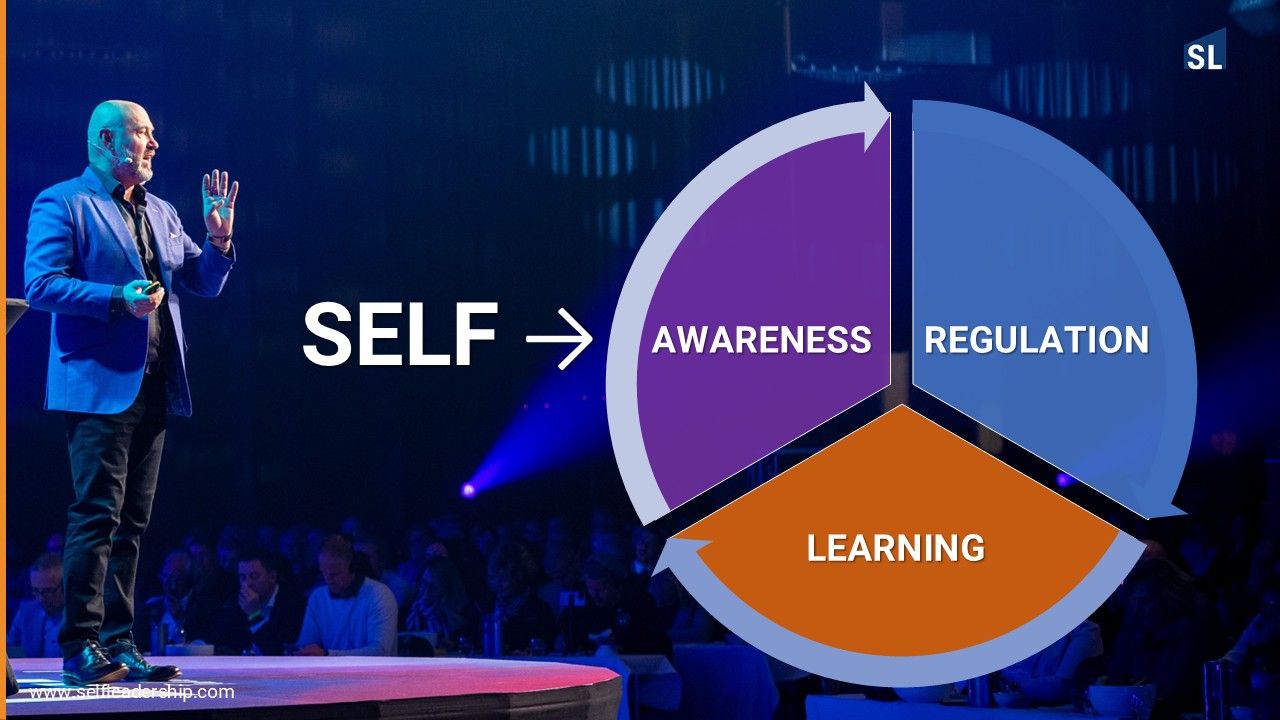
I define self-leadership as the practice of intentionally influencing your thinking, feeling, and actions toward your objectives (Bryant & Kazan, 2012). In a sales context, that breaks down into three specific, learnable skills. Together, they form the sales leadership model this piece is built around.
Self-awareness is what lets a sales leader read a room, a deal, or a rep's real state accurately, rather than through the distortion of their own pressure or bias. Most bad sales calls I've watched aren't lost on price or product. They're lost because the person leading the conversation missed what the buyer was actually signaling, usually because they were too focused on hitting their own number to notice. This isn't just an observation, there's a neuroscience basis for it: reading yourself and reading another person share overlapping brain circuitry, which is why leaders too absorbed in their own quota pressure genuinely miss what the buyer is signaling, not just figuratively.
Self-regulation is what separates leaders who stay composed after a lost deal from those who let one bad week spiral into a bad month. Rejection is structurally built into sales. Leaders who haven't developed self-regulation either avoid the hard conversations that come with accountability, or they overcorrect into micromanagement when the pressure spikes. Neither builds a team that performs.
Self-learning is the discipline of staying sharp in a field where the playbook changes constantly, buyer behavior shifts, tools change, what worked last year quietly stops working. Leaders who've stopped learning don't usually announce it. They just start coaching their teams on techniques that are a few years out of date, without realizing it.
What Happens When Sales Leaders Skip This Work
I've coached enough sales leaders to see the pattern repeat. The technically skilled rep gets promoted into a leadership role because they hit their number, not because anyone assessed whether they had the self-leadership foundation to actually lead a team. They inherit direct reports, a quota now aggregated across people they don't fully control, and none of the internal skills that made them effective individually.
The result is usually one of two failure modes: leaders who try to sell through their team rather than coach them, jumping into deals themselves rather than developing the rep's ability to close it independently, or leaders who avoid the accountability conversations that would actually improve performance because they haven't built the self-regulation to sit in that discomfort.
Both are fixable. Neither gets fixed by more sales training. They get fixed by building the self-leadership foundation that the role actually requires.
Building This in Your Organization
This is exactly the work covered in Self-Leadership: The Core Operating System for High Performance, one of the workshop programs I deliver specifically for sales organizations, and it's the same foundation I build with sales leaders in 1:1 executive coaching.
For sales organizations that want this capability built internally rather than delivered externally on an ongoing basis, coaches trained through the Andrew Bryant Self-Leadership (ABSL) Certification can deliver the same methodology directly to your leadership team.
The Bottom Line
Your sales team performs as you do. Not like your playbook says they should, like you actually show up under pressure, week after week. If you want a team that's resilient, accurate in how they read the room, and continuously improving, that starts with building those same capabilities in yourself first.
If your sales team's next kickoff needs this message delivered from the stage, not just read on a page, I bring this same self-leadership framework directly to the room as a sales kickoff keynote speaker, for teams at Microsoft, HP, and Zinzino among others.
Frequently Asked Questions
What is the sales leadership model based on self-leadership?
A three-competency model: self-awareness (reading deals and reps accurately rather than through the lens of your own quota pressure), self-regulation (staying composed and avoiding both avoidance and micromanagement after a setback), and self-learning (staying current as the sales playbook changes). It's the internal foundation that has to exist before pipeline reviews, coaching conversations, or forecasting discipline can actually work.
What does self-mastery coaching look like for sales leaders?
It starts with the same three competencies as self-leadership generally, self-awareness, self-regulation, and self-learning, applied specifically to the pressures of a sales role: reading a room accurately under quota pressure, staying composed after a lost deal, and staying current as buyer behavior and tools keep shifting. Coaching that skips this foundation and goes straight to pipeline tactics rarely holds once the pressure is real.
How do you develop self-awareness in a sales team?
Start with the leader, not the team. A sales leader who has learned to read a deal or a rep's real state accurately, rather than through the distortion of their own quota pressure, models the behavior their reps need to develop the same skill. Self-awareness isn't taught in a single training session; it's built through consistent reflection and honest feedback over time.
What happens when sales leaders skip building self-leadership?
One of two failure modes, usually. Leaders who sell through their team rather than coach them, jumping into deals themselves instead of developing a rep's ability to close independently. Or leaders who avoid the accountability conversations that would actually improve performance, because they haven't built the self-regulation to sit in that discomfort. Neither is fixed by more sales training; both are fixed by building the self-leadership foundation the role requires.
Does Andrew Bryant speak at sales kickoff events?
Yes. He delivers this same self-leadership framework as a sales kickoff keynote speaker, tailored for SKO audiences, and has done so for teams at Microsoft, HP, and Zinzino.
Ready to build the self-leadership foundation your sales leadership team needs? Book a strategy call.
Turn Insight Into ActionReading about leadership can change what you know.Self-leadership changes what you do.Develop your leadership effectiveness → Explore Self-leadership Discover your leadership strengths & gaps → Choose an Executive Coach Unlock the potential of your team → Workshops & Masterclasses Ignite your event or conference → Book Andrew Bryant as your Leadership Speaker "Prescription without diagnosis is malpractice" |