
Speaking about Resilience
Apr 21, 2023
Last updated: August 17, 2026
Resilience is an essential aspect of our ability to adapt and thrive in the face of challenge and adversity. It's built from psychological, social, and physiological foundations, and most people only train one of the three.
In the current environment, resilience is a crucial competency for both leaders and employees alike. In this post, we'll look at three strategies to build and strengthen it, before you need it.
The Three Foundations of Resilience
Resilience rests on three foundations, and neglecting any one of them weakens the other two.
-
Psychological resilience: The ability to cope with stress, trauma, or adversity in a way that avoids a toll on mental health and instead promotes personal growth. The psychologically resilient person practices self-leadership, using positive thinking for problem-solving and self-regulation to reframe negative experiences. This self-efficacy is the fuel for personal mastery.
-
Social resilience: The capacity of individuals, communities, and teams to adapt and recover from challenges. It depends on social support, community cohesion, and culture. People with strong social networks and supportive relationships are more likely to show resilience in the face of adversity, and the ability to form new connections and ask for help when needed is a crucial, often overlooked, factor.
-
Physiological resilience: The body's ability to adapt and recover from physical stress or illness. It can be improved through practices like regular exercise, adequate sleep, and a balanced diet. Physiological and psychological resilience are closely linked, since stress affects physical health and physical health affects stress tolerance.
Three Strategies to Build Resilience
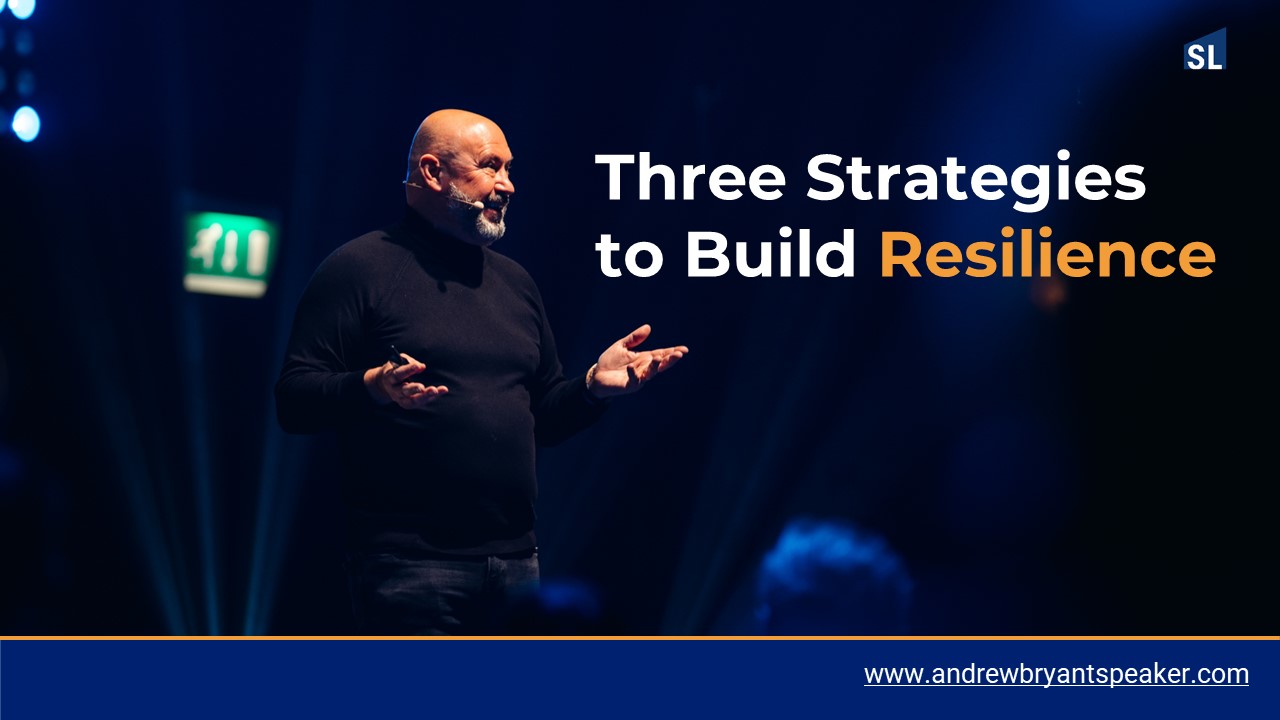
As an expert on self-leadership and peak performance, I'm often asked to speak about resilience or include the topic in a keynote. My experience coaching individuals and teams to perform under stress has highlighted three strategies in particular.
1. Self-Learning
Accept challenges as learning experiences, and use what you learn to adjust your behavior to the new situation. Adopt a growth mindset:
"There is no failure, only feedback, for improvement."
Adaptability is the key, and progress over perfection is the mantra if we're going to stay flexible and resilient in a rapidly changing world. Each challenge we survive, provided we learn from it, prepares us for the next one and makes us stronger.
2. Socialize
Whether you're an extrovert or an introvert, building strong social connections builds social resilience for yourself and your community. Your network doesn't have to be large, but it needs to be deep enough to both ask for and offer help.
3. Self-Love
"If you don't love yourself, how in the hell you gonna love somebody else?"
I love this line from RuPaul, which captures the importance of self-love and self-care. Practice self-compassion, be kind to your body with a balanced lifestyle, and relieve stress with massage, meditation, or time in nature.
Importantly, recognize that whatever is happening isn't about you personally, isn't about everything, and won't be permanent.
Definition or Recovery?
A simple, working definition of resilience is the capacity to bounce back from adverse experiences, maintain equilibrium during times of stress, and adapt positively to change. But "bouncing back" undersells what actually happens. See the resilience definition paradox for the deeper argument: resilient people aren't unchanged by what they've survived, they're adapted by it.
Conclusion
The secret to resilience is to build it before you need it: have the logs chopped before winter, and the tank full before the journey.
If you find yourself in an overwhelming situation, zoom out and see the bigger picture. This won't last forever, and you have options to solve the problem. In short: don't panic.
If you'd like coaching to become more resilient, or need a leadership speaker for your next conference or convention, feel free to contact me.
Frequently Asked Questions
What are the three types of resilience?
Psychological resilience (the capacity to cope with stress or adversity in a way that promotes growth rather than harm), social resilience (the strength of your support network and community), and physiological resilience (your body's capacity to recover from physical stress). They reinforce each other; neglecting one weakens the others.
How do you build resilience before a crisis?
Three habits: treat setbacks as feedback rather than failure (self-learning), build a support network deep enough to ask for help before you're desperate (socializing), and practice genuine self-compassion rather than self-criticism (self-love). Resilience built in calm periods is what actually holds under pressure.
Is resilience the same as recovery?
Not exactly, and it's worth being precise here. See the resilience definition paradox for the deeper argument: most dictionary definitions frame resilience as bouncing back to an original state, but real resilience usually means adapting into a changed one, not erasing what happened.
Why is social connection part of resilience?
Because resilience isn't purely an individual trait. People with strong, supportive relationships recover from adversity faster, and the ability to ask for help, rather than suffering alone, is one of the most overlooked factors in building it.
Turn Insight Into ActionReading about leadership can change what you know.Self-leadership changes what you do.Develop your leadership effectiveness → Explore Self-leadership Discover your leadership strengths & gaps → Choose an Executive Coach Unlock the potential of your team → Workshops & Masterclasses Ignite your event or conference → Book Andrew Bryant as your Leadership Speaker "Prescription without diagnosis is malpractice" |