
Influence at Work: Upward, Lateral, Downward, and in Circles
Jan 09, 2020
Last updated: August 26, 2026
Most advice on workplace influence treats it as one skill. It isn't. The influence that works on your boss doesn't work the same way on a peer with no reason to listen to you, and the influence that works on a peer doesn't automatically extend to the people who report to you. Influence has a direction, and each direction runs on a different mechanism.
Research consistently points to relationship failure with a boss as one of the biggest reasons capable managers plateau or derail. But blaming the boss, the org chart, or a lack of formal authority puts the problem outside your control, the opposite of what actually works. The question that gets you somewhere is simpler: what can I do that would make a difference?
Map your circle of influence
Before working on any single direction, it helps to see the whole map. When I teach programs on influence, I ask participants to draw a circle of influence like this:

Mark each circle with a tick or a cross for your current ability to influence the people in it. Larger circles usually need sub-circles for individual key people. The exercise is simple, but it does something most people never do deliberately: it shows you exactly where your influence is already strong and where it's actually weak, rather than where it just feels weak.
Influencing upward: your boss
When this topic comes up in coaching, the same handful of mindsets show up almost every time:
- My boss is autocratic
- My boss doesn't listen to me
- I don't want to jeopardize my career
- I have no power in the relationship
- My boss doesn't give me time
Every one of these hands control to the other person. That's the opposite of self-leadership. Here's what actually moves the needle instead.
Create an ally, not an adversary
Allies have open, honest conversations. They don't always agree, but they listen to what the other person wants and assertively state their own needs. "My boss doesn't care what I need" is the common objection, and the honest follow-up question is: do you know what they need? Have you actually told them what you need?
Find your boss's currency
A currency is anything that's genuinely valuable to the other person, the thing that "counts" in the relationship. For most bosses, that's some combination of:
- Commitment to the stated vision
- Doing things the right way
- Offering help without being asked
- Doing things faster than expected
- Providing information they need
- Having a skill the boss doesn't have
- Acknowledging the boss's contribution to the organization
- Activities that build the boss's reputation
- Using your contacts to expedite a task
- Expressing genuine gratitude for anything the boss gives
- Minimizing discomforts and distractions for the boss
Noticing which currencies your boss actually responds to, and consistently paying them in that currency, costs you a small amount of time and energy. What it buys you is reciprocity.
Reciprocity: the mechanism underneath all of this
When someone does something for us, we feel obliged, consciously or not, to reciprocate. This is the single most reliable principle of influence, it's the entire reason marketing campaigns lead with a free gift. Once your boss "owes" you first, asking assertively for what you want becomes far easier.
Assertiveness: the actual script
We're most influential when we frame a request with confidence and conviction, not hedging. Two structures that work:
"[Boss's name], I understand that [their currency or pet project] is important to you, and to do this I believe we should [your suggestion]."
"[Boss's name], I appreciate that [their currency or pet project] is important to you, and to achieve this I will need [your request]."
Most people underestimate their ability to influence upward. Believe you can, and you'll generally find a way.
Influencing laterally and downward
In a modern matrix-style organization, your success depends as much on what you can get others to do as on what you do yourself. The effective manager learns what matters to the people in their circle and speaks in those terms, rather than simply stating their own needs and hoping that lands.
The same currency-and-reciprocity mechanics that work upward work laterally and downward too. I once coached a senior manager with a long history of antagonizing clients and colleagues by telling them what he thought was right. We worked on one shift: stop telling, start asking what's actually important to the people in his circles. The change in his relationships and his efficiency was dramatic, and it surprised him. He'd assumed asking questions would take longer than telling people the obvious answer. It didn't.
Have you actually drawn your circle of influence? Do you know the currencies of the people in it? Are you exercising all the influence available to you, or just the influence that feels comfortable?
Frequently Asked Questions
What is lateral influence?
Lateral influence is the ability to get peers, colleagues, and people outside your direct authority to act, without relying on formal power. It runs on the same mechanics as upward influence: understanding what the other person values (their currency) and framing requests in those terms rather than your own.
What is downward influence?
Downward influence is how a manager or leader moves their team to act, beyond simply issuing instructions. It works best when built on the same reciprocity and currency principles as lateral and upward influence, understanding what your people value and acknowledging it, rather than relying on positional authority alone.
What is a circle of influence?
A circle of influence is a mapping exercise: you draw concentric circles representing the people and groups around you (boss, peers, direct reports, clients, and so on) and mark your current ability to influence each one. It's a practical way to see where your influence is genuinely strong versus where it just feels weak.
How do I influence my boss without formal authority?
Build the relationship as an ally rather than a subordinate petitioning a gatekeeper, identify what your boss genuinely values (their currency), consistently deliver on it to build reciprocity, then make assertive, specific requests framed around what matters to them.
How do I increase my influence at work generally?
Start by mapping your circle of influence honestly, then apply the same core mechanism, currency and reciprocity, in whichever direction (upward, lateral, or downward) you're weakest. Influence isn't a personality trait some people have and others don't. It's a set of behaviors that respond to deliberate practice.
In conclusion
As a leadership speaker and self-leadership coach, I'm frequently asked how to increase influence. The message doesn't change based on direction: influence starts with you.
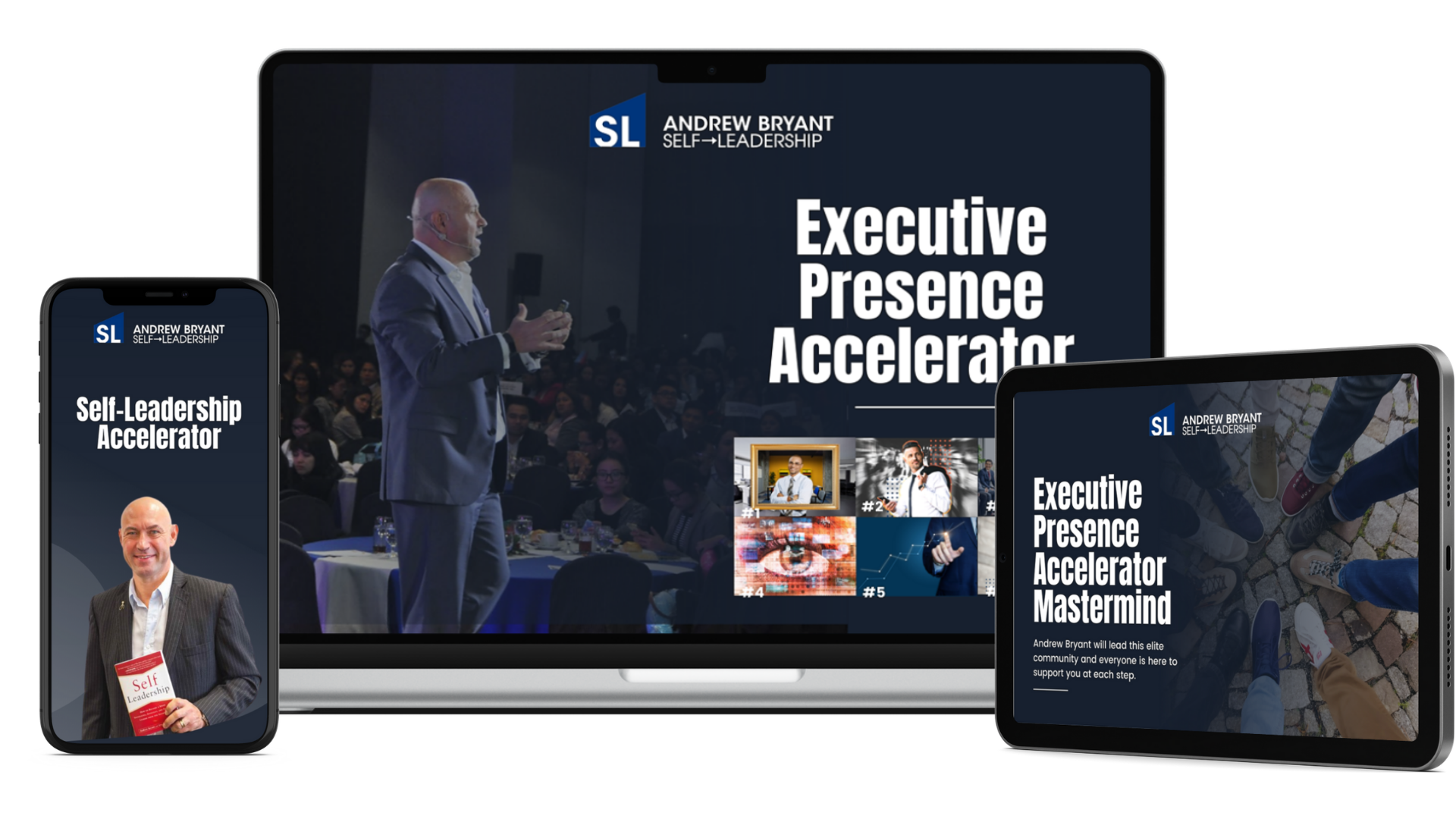
You can build the executive presence that increases your influence upward, laterally, and downward with the on-demand online coaching program below.
Turn Insight Into ActionReading about leadership can change what you know.Self-leadership changes what you do.Develop your leadership effectiveness → Explore Self-leadership Discover your leadership strengths & gaps → Choose an Executive Coach Unlock the potential of your team → Workshops & Masterclasses Ignite your event or conference → Book Andrew Bryant as your Leadership Speaker "Prescription without diagnosis is malpractice" |