
What Is Human Potential? Why It Matters More in the Age of AI
Dec 06, 2025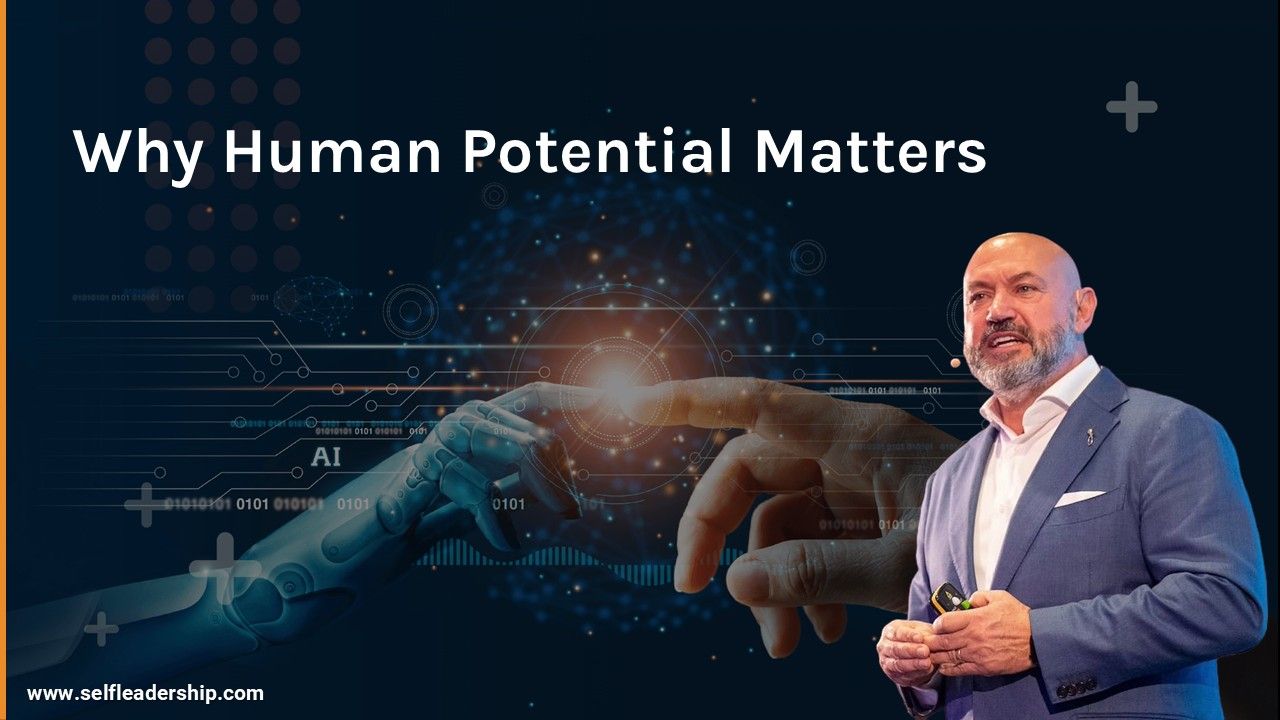
Last updated: August 26, 2026
Three people can sit in the same role, with the same job description, and produce wildly different results. One is a star. One is steady but unremarkable. One is quietly disengaged, doing just enough to avoid being noticed.
The easy explanation is talent. The real explanation is usually something else entirely, and it's the same explanation whether you're looking at an individual, a team, or an entire company.
Potential Isn't One Thing. It's Three, Multiplied
In POTENTIAL-IZE, I define human potential with a formula:
Potential = Capacity x Opportunity x Willingness
Capacity is what you're actually capable of, your skills, knowledge, and cognitive resources. Opportunity is whether your environment lets that capacity show up. Willingness is whether you choose, consciously or not, to bring your full capability to the situation in front of you.
The formula is multiplication, not addition, and that detail matters more than it looks. Add three numbers and a weak one just drags down the average. Multiply them and a zero anywhere collapses the whole result. A brilliant person (high Capacity) in a role that gives them no room to use that brilliance (low Opportunity) will underperform indefinitely. So will a brilliant person in a great role who has quietly stopped trying (low Willingness).
I go into the full framework, including how organizations diagnose this gap at scale, in Human Potential in the Age of AI. This post is the personal version of the same question: which variable is actually holding you back?
Three Scenarios. Only One of Them Is a Skills Problem
The capable employee no one promotes. She delivers, consistently, and has for years. But every promotion goes to someone else. Nothing about her Capacity has changed. What's missing is Opportunity, visibility, sponsorship, or simply a structure that doesn't have room to advance her. No amount of upskilling fixes an Opportunity problem, and treating it like one just leaves her more qualified and equally stuck.
The manager who won't let go. He has good people, a functioning team, and every condition he needs to delegate real ownership. He still reviews every deliverable line by line. Capacity, check. Opportunity, check. What's missing is Willingness, in this case, likely rooted in a belief that his value depends on being the one who catches every mistake. No process fix or org chart change touches that; it's a self-leadership problem, not a structural one.
The new hire who's eager but underwater. He wants it. He's been given real responsibility from day one. He's just not there yet. Willingness, high. Opportunity, high. Capacity is the actual gap, and the fix is training and time, not a pep talk or a bigger project.
Same formula, three completely different diagnoses, three completely different fixes. Most people, and most managers, only ever reach for one intervention (usually training) regardless of which variable is actually broken.
Why This Gets Sharper, Not Softer, With AI
AI is quietly compressing the Capacity variable for a lot of knowledge work. A junior analyst with the right tools can now produce a level of first-draft analysis that used to require years of experience. When Capacity becomes more accessible to everyone, it stops being the thing that differentiates people.
What's left is Opportunity and, especially, Willingness. If the skill gap narrows because the tools are doing more of the heavy lifting, the gap that remains is whether someone actually engages: takes initiative, owns the outcome, pushes past the AI-generated first draft instead of stopping there. That's not a technology question. It's a self-leadership question, the same one at the center of the formula above.
A Two-Minute Self-Diagnostic
Pick something you're currently stuck on, a project, a goal, a habit you can't seem to build, and ask, in order:
- Capacity: Do I actually know how to do this well, or am I genuinely still learning the skill?
- Opportunity: If I had the skill down cold, does my current situation actually let me use it, or is something structural in the way?
- Willingness: If neither of those is the real issue, am I choosing, quietly, not to bring my full effort here? And if so, why?
Most people want the answer to be Capacity, because it's the easiest one to act on: take a course, read a book, practice more. It's also, in my experience coaching leaders for over two decades, the least common actual answer. Willingness is uncomfortable to diagnose in yourself because it means admitting the obstacle isn't external. That discomfort is usually a good sign you've found the real variable.
This is also exactly the territory the IGNITE Framework is built to work through systematically, and it's the kind of diagnosis I do regularly in one-to-one coaching with leaders who are certain their problem is a skills gap and discover, a few conversations in, that it never was.
Turn Insight Into ActionReading about leadership can change what you know.Self-leadership changes what you do.Develop your leadership effectiveness → Explore Self-leadership Discover your leadership strengths & gaps → Choose an Executive Coach Unlock the potential of your team → Workshops & Masterclasses Ignite your event or conference → Book Andrew Bryant as your Leadership Speaker "Prescription without diagnosis is malpractice" |