
Why Willpower Isn't the Answer to Self-Regulation
Aug 13, 2026
Back in 2016, 36 research labs pooled their data to test one of the most-cited findings in leadership and psychology: the idea that willpower is a limited resource, like a battery that drains as you use it. The result, across 2,141 participants, was an effect size of 0.04. Statistically, that is indistinguishable from nothing. The "conserve your willpower" advice you have been given for the better part of two decades was built on a foundation that does not hold.
I mention this because most of what leaders are told about self-regulation is a variation on the same broken idea: manage your emotional energy like a scarce resource, ration your discipline, avoid decision fatigue. It sounds sensible. It is also the wrong prescription, because it starts from the wrong diagnosis. Prescription without diagnosis is malpractice, and this is a diagnosis error at scale.
For the full picture of where self-regulation fits alongside self-awareness and self-learning, see what self-leadership actually means. This piece goes deeper into one specific and widely misunderstood part of it: what actually works under pressure.
What self-regulation actually is
Self-regulation is not a tank you empty and refill. It is a skill, and skills improve with the right kind of practice, not with rationing.
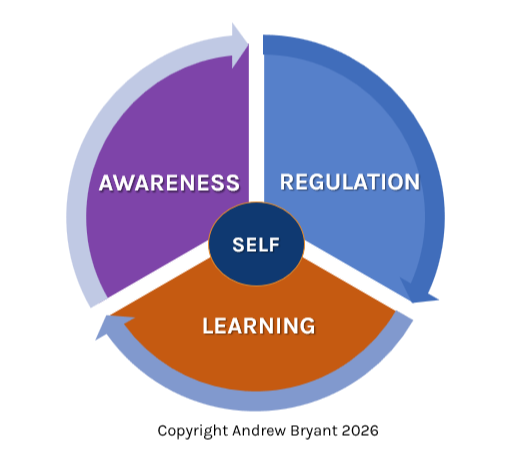
In my work with executives across 40 countries, self-regulation sits as the second of three self-leadership competencies, alongside self-awareness and self-learning. Self-awareness is noticing what you are feeling and why. Self-regulation is what you do next. It is the gap between the trigger and your response, and leadership happens entirely inside that gap.
I think of it as the difference between being a Passenger and being a Driver. The Passenger reacts. Someone challenges you in a meeting, and you feel your jaw tighten before you have decided anything, and the sharp reply is out before you have chosen to say it.
The Driver notices the same tightening of the jaw and treats it as data, not an instruction. Same trigger, same emotion, different outcome, because the Driver has built the skill of creating space before acting.
That space is trainable. It is not a matter of having more or less willpower on a given day.
Why "manage your energy" advice keeps failing leaders
If self-regulation were about energy conservation, the leaders with the most disciplined morning routines and the tightest schedules would never lose their composure under pressure. Most of us know that is not true. I have coached CEOs with immaculate personal systems who still detonate in a board meeting when a number comes in wrong.
The newer research actually points to motivation, not depletion. When people believe willpower is a limited resource, they perform worse under strain, because the belief itself becomes the constraint. When they do not hold that belief, the same strain does not produce the same collapse. In other words, the story you tell yourself about your own self-control is doing more work than the self-control itself.
This matters for how you coach yourself and your team. Telling a leader to "protect their energy" before a high-stakes negotiation reinforces the very belief that predicts they will struggle. Teaching them to treat the spike in heart rate as information, and to widen the gap between trigger and response, gives them something they can actually use in the room.
Building the skill, not the reserve
Here are a few practices I speak about and use with clients, none of which depend on willpower as fuel:
Name it to tame it. The instant you notice a strong physical reaction (a tight chest, heat in your face, the urge to interrupt), label it silently: "This is frustration." Labeling an emotion engages the prefrontal cortex and measurably reduces the amygdala's grip on your next move. This is the fastest on-ramp from Passenger to Driver.
Build the pause as a rehearsed move, not a hope. Leaders who self-regulate well under pressure do not discover calm in the moment. They have rehearsed a specific physical pause (a breath, a sip of water, a written note before speaking) so often it becomes automatic. You are not relying on willpower in the heat of the moment. You are executing a drill.
Separate the event from the story. Most emotional flooding in leadership comes not from what happened but from the meaning you immediately attach to it: "They are undermining me," "This will fail," "I have lost credibility." Self-regulation improves dramatically once you train yourself to hold the event and the interpretation as two separate, testable things.
Treat every high-pressure moment as a rep. Since self-regulation is a skill and not a reserve, every difficult meeting is practice, not a threat to your remaining store of composure. That single reframe changes how leaders show up to conflict.
For founders specifically, this is often the highest-leverage skill on the list, since there's rarely anyone above you to absorb a bad reaction before it reaches the team. I cover the founder-specific version of this practice, the 90-second reset, in Self-Leadership for Entrepreneurs: Lead Yourself First, Then Your Business.
Self-regulation is also the missing step in a common leadership failure mode: the leader who calls themselves a servant leader but is really just absorbing everyone else's problems without ever pausing to diagnose whether that's actually helping. I unpack that pattern in Self-Leadership vs. Servant Leadership.
The same trigger-to-response gap is usually behind stalled motivation too, not a willpower shortage. The five-step system for closing it is in How to Get Your Motivation Back.
It's also what closes the gap between naming a confidence problem and actually walking into the room, making the ask, or taking the risk. I cover how confidence breaks down into four distinct situations in Leadership Confidence: How to Build It as a Manager.
And it's the same gap that decides how fast a decision actually gets made once the information's already on the table. I go into why in Why Self-Leadership Makes Decisions Faster.
Frequently Asked Questions
Is self-regulation the same as self-discipline? They overlap but are not identical. Self-discipline is generally about sustained follow-through on a goal over time, such as sticking to a habit. Self-regulation is narrower and more immediate: managing an emotional or impulsive reaction in the moment. Strong self-regulation makes self-discipline easier to sustain, because fewer decisions get hijacked by an unmanaged reaction.
How does self-regulation relate to emotional intelligence? Self-regulation is one of the core components of emotional intelligence, alongside self-awareness, motivation, empathy, and social skill. Of the five, it is the one most directly responsible for how a leader behaves under pressure, since it governs the gap between feeling and action. This is a theme I speak on regularly with leadership teams; if you are exploring bringing this to your organization, it is one of the topics I cover on stage.
Is willpower a limited resource that gets used up during the day? Large-scale replication studies, including a 2016 test across 36 laboratories and over 2,100 participants, found no meaningful evidence for willpower as a depletable resource. What looks like depletion is better explained by shifting motivation and by the belief that willpower is limited in the first place. Leaders are better served treating self-regulation as a trainable skill than as fuel to be rationed.
How can leaders manage their emotions under pressure without relying on willpower? Build repeatable, rehearsed responses (naming the emotion, a physical pause, separating fact from story) so the skill runs on practice rather than in-the-moment self-control. The goal is to widen the gap between trigger and response until choosing a considered reaction becomes the default, not the exception.
If you are building this capability across a leadership team, this is core territory in my coaching work and in the IGNITE Framework.
Turn Insight Into ActionReading about leadership can change what you know.Self-leadership changes what you do.Develop your leadership effectiveness → Explore Self-leadership Discover your leadership strengths & gaps → Choose an Executive Coach Unlock the potential of your team → Workshops & Masterclasses Ignite your event or conference → Book Andrew Bryant as your Leadership Speaker "Prescription without diagnosis is malpractice" |