Andrew Bryant: expert source for journalists
Andrew Bryant, CSP, is the founder and CEO of Self Leadership International and the author of POTENTIAL-ize (Wiley, 2026).
He is available to journalists for interview and comment on self-leadership, human judgment in AI-assisted work, and what happens to management when the first draft comes from a machine.
He responds to media requests the same day.
WhatsApp +351 968127163
What Andrew can speak to
1. The job AI leaves you is judging a machine's work, and nobody was trained for it.
When AI produces the first draft, the human task shifts from production to judgment: deciding what is good enough, what is subtly wrong, and what to send. Being an effective human-in-the-loop is a harder skill than the one it replaced; it appears in no job description, and almost nobody is being developed for it.
2. AI decisions get made on efficiency because efficiency is cheap to instrument. What gets displaced is effectiveness, and effectiveness has no defined measurement.
Cost per ticket and time per task are easy to measure. Judgment, trust, and the escalation a human would have caught are not, so they never appear in the business case. The argument is not that AI is bad. It is that a measurement asymmetry is driving the decision.
3. The AI headcount reversal keeps surprising the people who authorized the cut.
Klarna is the case that said it out loud: the AI assistant was announced in early 2024 as doing the work of around 700 full-time customer service agents, and in 2025 the company resumed hiring human agents, with CEO Sebastian Siemiatkowski saying the cost focus had gone too far and quality had suffered. The interesting question is not whether AI works. It is why the reversal is always a surprise.
4. Frontline managers do not need another leadership model. They need less to remember, not more.
Deliberately not on this page: the founder-bottleneck argument (that the founder bottleneck is a self-regulation problem rather than an org-design problem). It is the HBR submission's entire thesis and the only one of the set that reverses a familiar prescription, which is precisely what HBR's originality test measures. Putting the reversal in one line on his own site gives away the thing that gets it through the Submittable queue. Hold it.
Klarna wording is fixed at the level of detail above. No dollar figures, no rehire headcounts, unless checked that week.
Human Potential in an AI Era →The research, stated precisely
What distinguishes Bryant's approach to self-leadership is that it moves beyond strategy taxonomy to a competency architecture. Strategies are what you do. Competencies are what you become capable of doing well. Development is the bridge between the two.
What is Self-leadership?- Knotts et al. (2022). "Leading from the inside out: a meta-analysis of how, when, and why self-leadership affects individual outcomes." European Journal of Work and Organizational Psychology, 31(2).
- Krampitz et al. (2021). "Self-leadership: A meta-analytic review of intervention effects on leaders' capacities." Journal of Leadership Studies. The one that matters for any claim that self-leadership is trainable rather than a fixed trait.
- Vargas et al. (2025). "Lead yourself to the zone and be happy." PLOS ONE, DOI 10.1371/journal.pone.0331673. 64 managers, an 8-week self-leadership program, 4,383 daily measurements. Increases in self-leadership were associated with greater flow and happiness.
Credentials and background
- Certified Speaking Professional (PSAA, 2009),
- Professional Certified Coach (ICF, 2004)
- Founder, Self Leadership International ( established 1999)
- Author of five books, including POTENTIAL-IZE, The New Leadership Playbook (2021), and co-author of Self Leadership (Bryant & Kazan, McGraw-Hill, 2012)
- Faculty Associate, Singapore Management University
- Physiotherapist and Acupuncturist (1982, 1985), worked with elite athletes
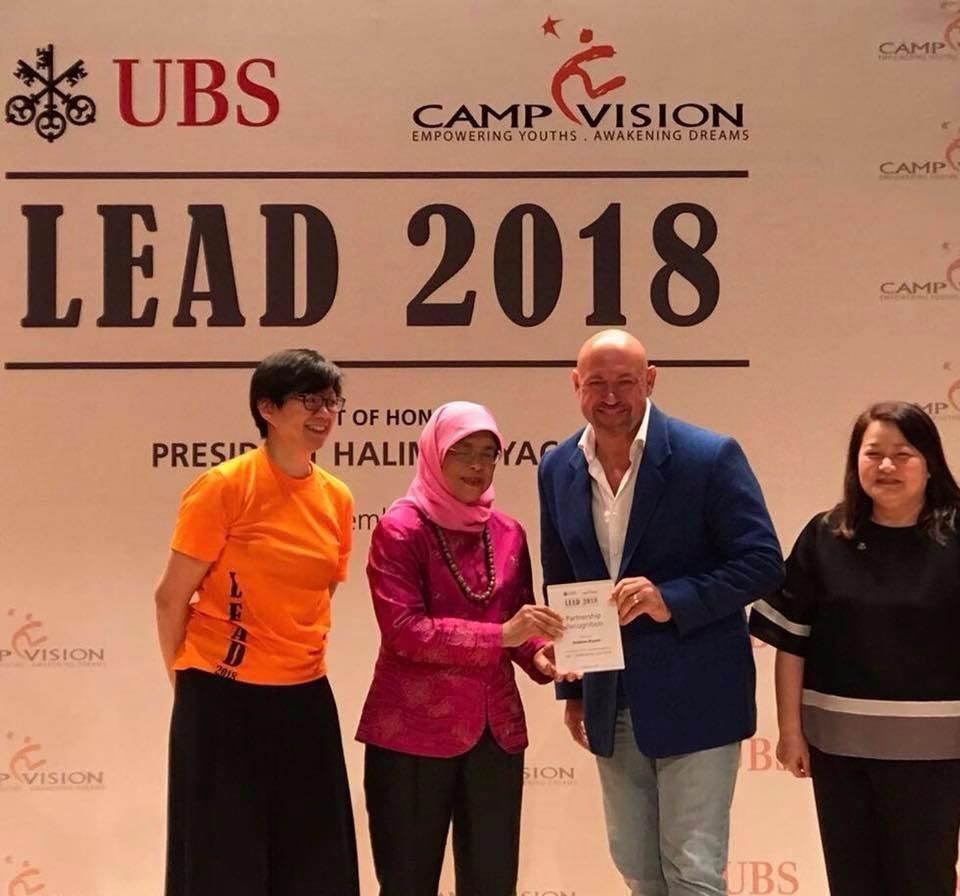
- Twice recognized by Singapore's President for community leadership
- Based in Sintra, Portugal, and has worked across 40+ countries










How to reach him, and how fast he answers
Andrew typically responds to media requests on the same working day.
He is based in Portugal (unless traveling to speak), which is UTC+1 in summer and UTC in winter.
If your deadline is within four hours, put DEADLINE in the subject line.
You can also WhatsApp+351 968127163
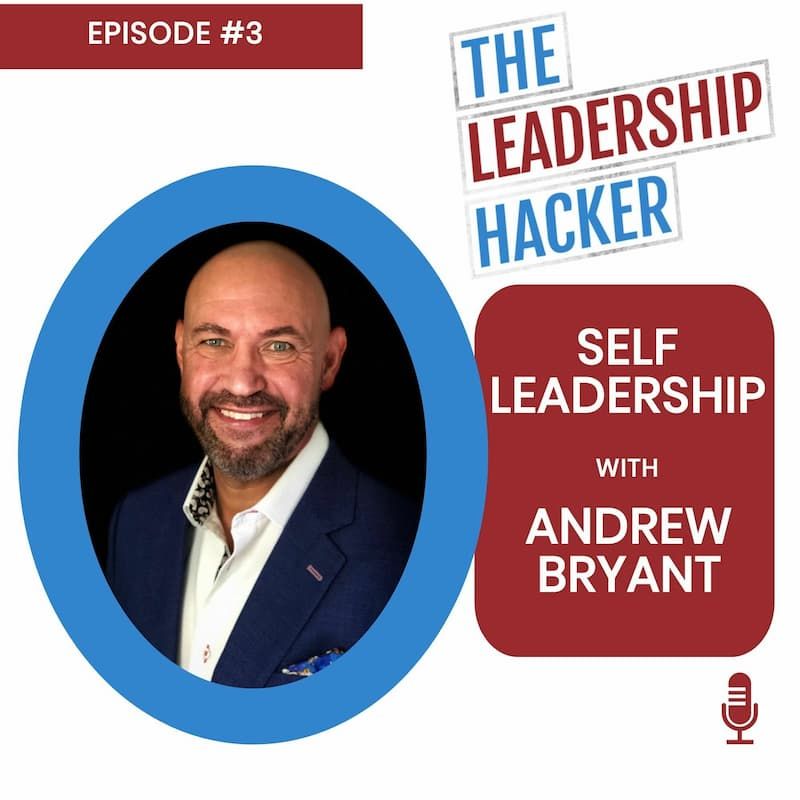
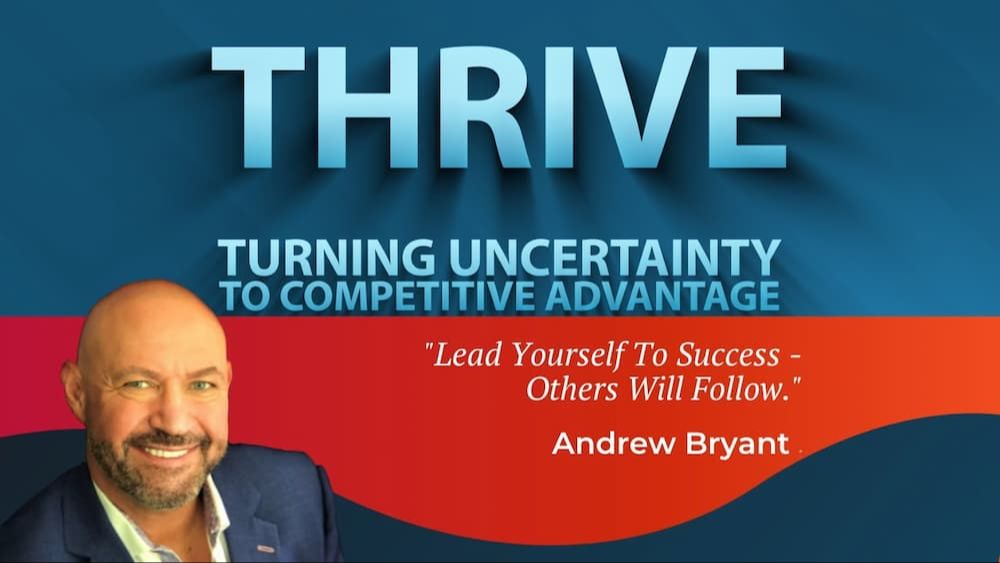
Bios and high-resolution images
Andrew Bryant is the Founder of Self Leadership International (est. 1999), a Certified Speaking Professional, executive coach, and the author of five books, including the foundational academic text Self Leadership (Bryant & Kazan, McGraw-Hill, 2012), and his most recent work is POTENTIAL-IZE: How Leaders Unlock Human Potential in the Age of AI (Wiley, 2026).
What distinguishes Andrew in this space is not simply what he knows. It is what he has built. He co-authored the most widely cited working definition of self-leadership, cited in peer-reviewed research, then spent the following years testing and refining that framework with executive leadership teams, Fortune 500 companies, Silicon Valley startups, and major multinationals across more than 40 countries.
That combination of academic foundation, deep practitioner experience, and the ability to make ideas digestible and applicable is what makes him an in-demand speaker.
In POTENTIAL-IZE, he introduces the IGNITE Framework, a six-stage leadership development model (Inspire, Guide, Nurture, Integrate, Transform, Evaluate) designed specifically for organizations navigating AI-driven change. The book's central argument: as AI assumes cognitive tasks, human judgment, trust-building, and self-directed performance become more valuable, not less. Leadership development that fails to address this shift misses the point.
As a former physiotherapist and acupuncturist who worked with elite athletes, he understands that high performance is an inside-out process. In our minds, bodies, and organizations.
English by birth, Australian by passport, married to a Brazilian and now based in Portugal after 17 years in Asia, Andrew is a genuine global citizen whose cultural fluency has served audiences from Singapore to Stockholm to San Francisco.
More about Andrew →
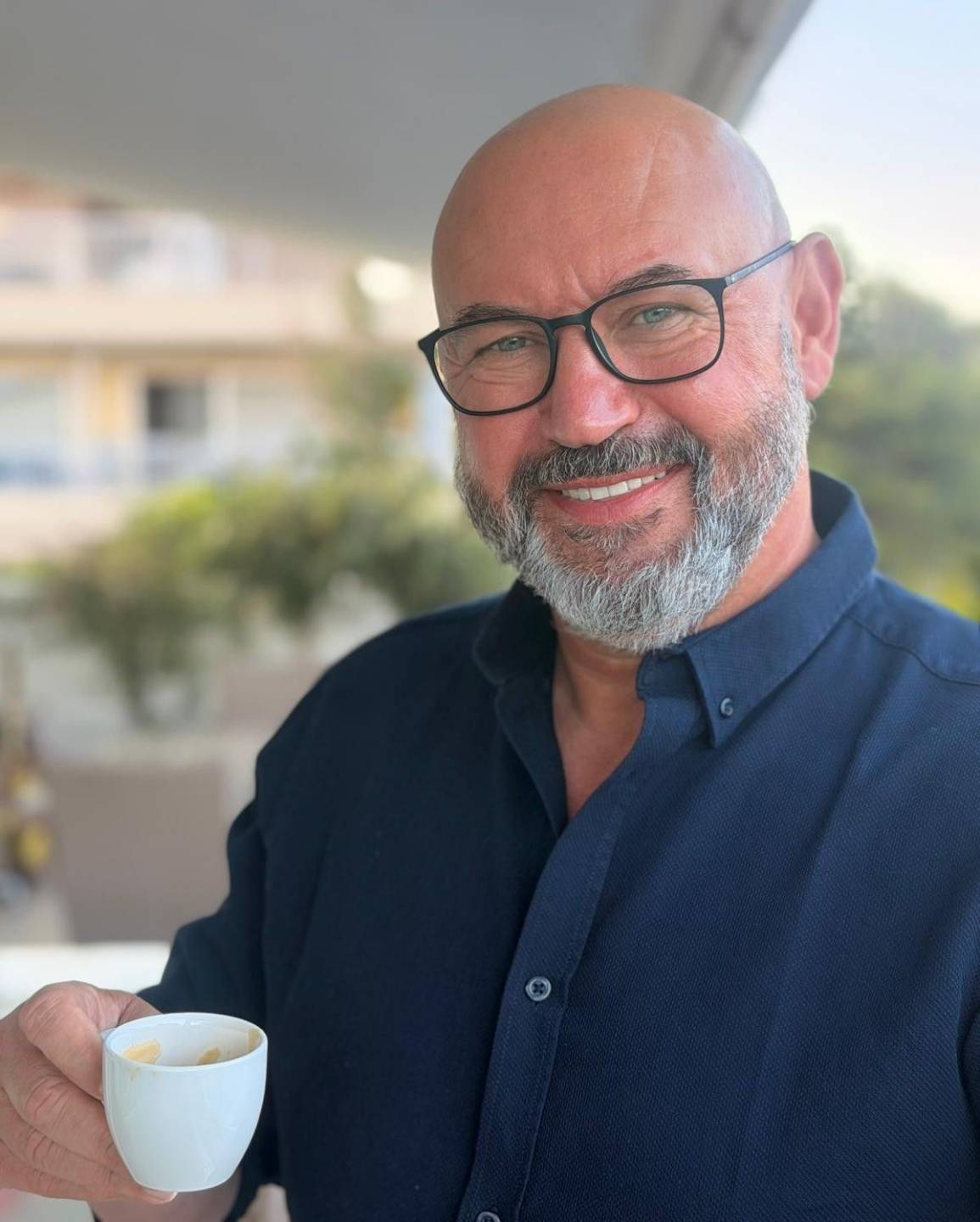
Free to use with credit: Self Leadership International.
Recent commentary
Entrepreneur UK, 28 April 2026. Quoted in "How businesses can balance AI innovation with effective risk management", an Entrepreneur UK staff-bylined article.
Forbes, 16 July 2026. Quoted in "4 Ways To Build Future Skills In Your Team" by Sally Percy, a Forbes Leadership article quoting four experts.
CHRO Daily, 7 September 2026. Quoted in "Manager Training That Sticks in Busy Workplaces: HR Leaders Share Low-Lift Wins", a staff-bylined roundup of twelve contributors.