Executive Leadership Team Development:
From Fragmented Group to Genuine Competitive Advantage
The Executive Leadership Team is the most consequential team in any organization. When it works as One Team — with genuine collective accountability, shared priorities, and the trust to surface real problems — the effect on culture and performance compounds throughout the business.
Most ELTs do not work that way. Most are workgroups operating under the label of a team. Each CXO is accountable for their vertical, quietly competing for the CEO's attention and resources, aligning in meetings while protecting their departments in the corridors.
I have spent twenty-five years facilitating executive leadership team development across three continents, from Fortune 500 corporations to high-growth startups. The cultural contexts differ. The fundamental dynamics of executive teams do not.
Just because you call it a team does not make it a team
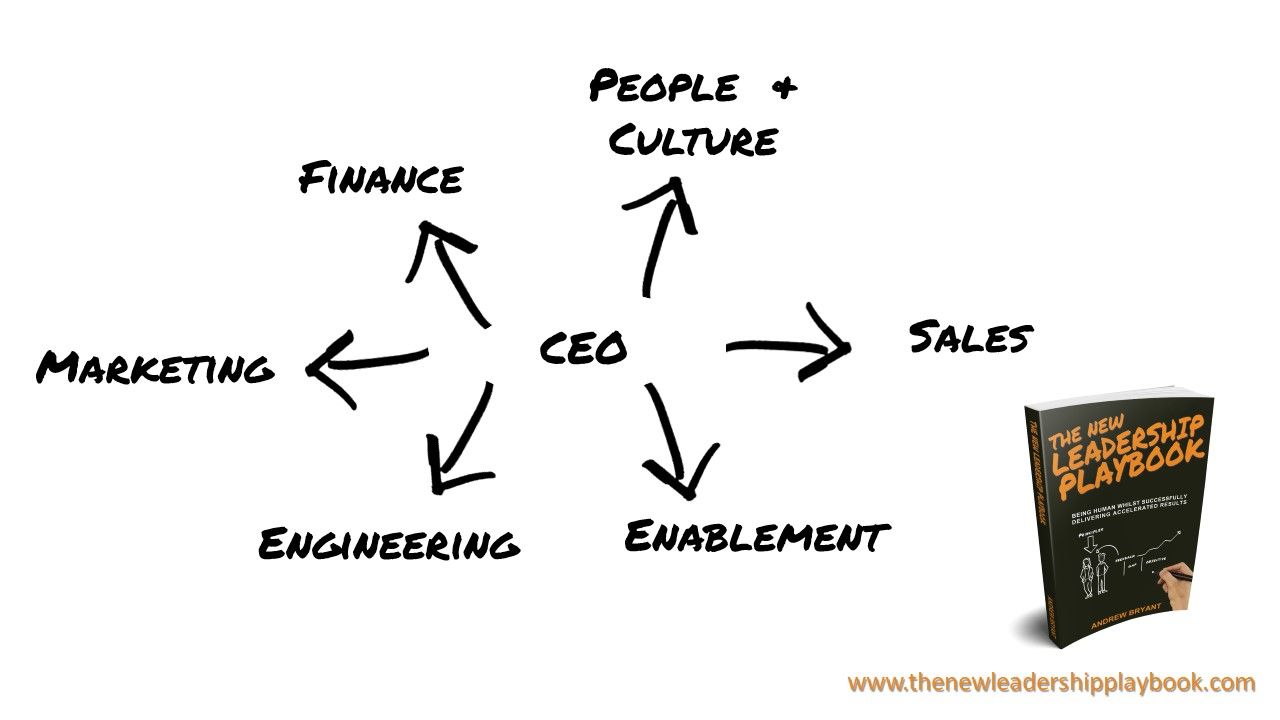
A team operates with mutual accountability. Members work toward a common goal, success depends on collective performance, and leadership is distributed rather than siloed. When one person wins, the team wins.
A workgroup operates with individual accountability. Each member has their specific responsibilities, and the group's output is the sum of individual efforts. There is limited interdependence, and the focus is on departmental achievement rather than collective outcomes.
The distinction sounds academic until you map it onto a real executive meeting. In a genuine team, the CFO who spots a risk in the CMO's budget says so directly, in the room, because their reputation is bound to the collective outcome. In a workgroup, the same CFO stays quiet and notes it for later — because surfacing the problem risks a political cost that outweighs the organizational benefit.
That calculation, repeated in every ELT interaction, is how organizations lose years of strategic momentum to dynamics that no one is formally responsible for fixing.
Not sure your ELT has this problem?Five signs your ELT is a workgroup pretending to be a team

The seniority of an Executive Leadership Team means its dysfunction rarely receives the scrutiny applied to teams lower in the organization. HR is often structurally subservient to the very group it would need to challenge. It typically takes an outside party, a board member, a courageous Chief People Officer, or an external facilitator to name what everyone already privately knows.
These are the five patterns I see most consistently.
No shared vision that anyone actually uses. Not the one on the company website or in the strategy deck. The one that governs real trade-off decisions when two CXOs want the same budget and a choice has to be made. If that choice is made by hierarchy rather than by reference to shared priorities, the vision is decoration.
Communication routed through intermediaries. I have worked with CEOs who discovered their CTO and CMO had not spoken directly in six months — every message passing through chiefs of staff or email chains with five recipients. That is not a communication style preference. It is a symptom of a breakdown in the relationship between two executives that the CEO has yet to surface and address.
Conflict expressed as silence. Healthy teams disagree openly and resolve disagreements before they leave the room. Dysfunctional ELTs perform consensus in meetings and undermine decisions afterward. If your ELT meetings feel smooth but strategic execution is consistently inconsistent, the conflict exists — it is just not happening where you can see it.
Talent leaving at layers two and three. The highest performers in the organization below the ELT have the most accurate read on executive dysfunction. They feel the mixed signals, the competing priorities, the unspoken tensions — before those patterns show up in engagement data. When they leave, the ELT has usually been the problem for longer than leadership has acknowledged.
Agility theater. The ELT announces a strategic pivot. Priorities are declared. Twelve weeks later, nothing has actually changed for the people who would need to change it. When an executive team cannot make collective decisions that the whole organization subsequently acts on, the team has not made a decision — it has held a meeting.
Confident Humility versus Ignorant Certainty
Leading at the executive level is genuinely difficult. Balancing people, process, and commercial performance in volatile, high-stakes environments while being held accountable for outcomes that depend on factors you cannot control — that pressure creates a specific kind of risk that most leadership development programs do not address directly.
The risk is Ignorant Certainty.
Ignorant Certainty is not always arrogance, though sometimes it is. More often it is the accumulated weight of an unrealistic expectation: that members of an ELT should know everything, should have answers, should project confidence even when the situation genuinely warrants uncertainty. Leaders who spend years meeting that expectation often stop distinguishing between what they know and what they assume. They become sure they are right. The people around them learn not to argue. The CEO who operates this way does not just make worse decisions — they produce clones. The entire ELT begins to replicate the behavior, and whole cultures are built on the pattern.
The alternative is Confident Humility. The leader who is grounded enough to say: I do not know everything. I do not need to. Together with the right people, in the right conditions, we will find what we need.
That posture does something Ignorant Certainty never can. It gives the rest of the team permission to be honest. And honest executive teams — where the CFO can acknowledge they do not fully understand the technology roadmap, and the CTO can admit they find financial modeling difficult — make categorically better decisions than teams performing competence they do not have.
Confident Humility is not a soft virtue. In the context of an executive team, it is a structural competitive advantage.
The Foundation, Alignment, and Acceleration Framework
By Andrew Bryant
Recognizing that an ELT is not functioning as a true team is one thing. Knowing how to change it is another. Over twenty-five years of facilitating executive leadership team development, I have found that lasting transformation moves through three distinct phases.
1. Foundation
The Foundation phase addresses what every ELT has, but almost none will name without external facilitation: the individual agendas running beneath the collective one.
ELT members have spent their careers being rewarded for individual excellence. CFOs build their reputations by protecting their numbers. CROs compete for budget. CMOs defend their function's value against every other function's value. These are not character flaws — they are rational behaviors given the incentive structures most executives have operated inside for their entire careers. Asking them to suddenly prioritize collective success over personal wins without changing the underlying conditions is not a development challenge. It is a structural contradiction.
Successful Foundation work begins with diagnostic honesty about the current state. I facilitate sessions where each ELT member articulates their actual goals — not the version they present in board meetings. Where the real tensions between functions are surfaced rather than managed around. Where the CEO hears directly, often for the first time, what their leadership style is producing in the people around them.
Until you do this work, everything else is built on quicksand.
2. Alignment
The Alignment phase creates genuine interdependence — conditions in which ELT members' success becomes structurally dependent on collaboration rather than competition.
This is where executive leadership team development differs most sharply from conventional team building. The goal is not to make people like each other. It is to architect the incentive and accountability structures so that siloed behavior produces worse outcomes for the individual than collaborative behavior does. Shared OKRs with cross-functional ownership. Compensation models that tie individual performance to collective results. When the CFO's annual review includes the CTO's delivery metrics, the relationship between them changes fast.
Alignment also establishes the team's code of conduct — the behavioral norms that separate high-performing executive teams from merely functional ones. These are not values statements. They are specific, enforceable agreements about how the team operates: how disagreement is surfaced, how decisions are made and then honored, how credit is attributed, and how members hold each other accountable in real time, not just in retrospectives.
3. Acceleration
The Acceleration phase is where the investment delivers its return.
With psychological safety established and collaboration normalized, the ELT stops being a source of organizational friction and becomes a source of organizational advantage. Decision velocity increases — choices that previously took weeks of positioning and negotiation happen in a single meeting. Strategic pivots are executed rather than announced.
The culture shift cascades downward through the organization because people below the ELT can now see, for the first time, that the most senior leaders are actually behaving in the ways they have been asking everyone else to.
This phase does not have a fixed endpoint. High-performing executive teams continue to invest in their own development because they have experienced what a functioning team produces, and they have too much to lose by letting that slip.
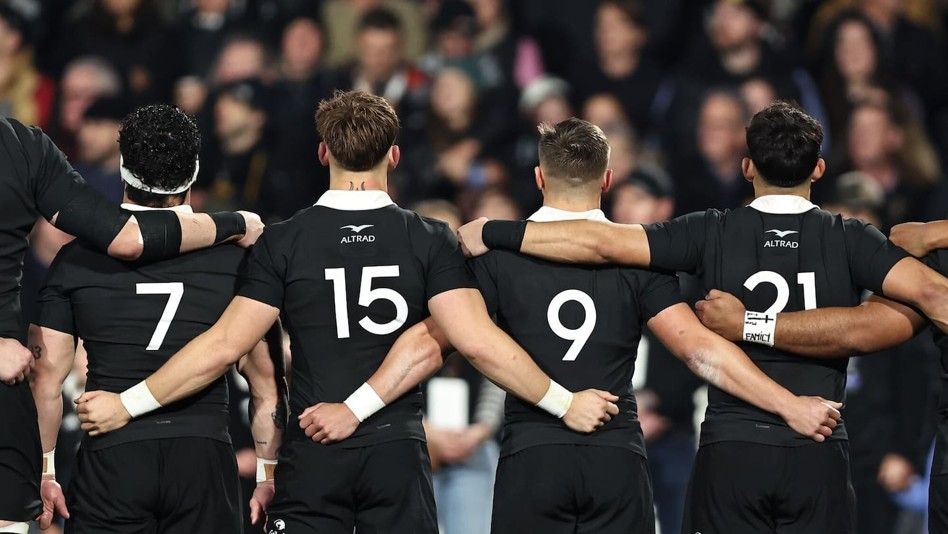
The All Blacks rugby team captures the spirit of this framework with the phrase "leave the jersey in a better place."
Every ELT member is accountable not only for their individual performance but also for elevating the team's collective capabilities and reputation.
If you are reading this and recognizing your team in these descriptions, the most useful next step is a conversation.
Not a brochure. Not a proposal. A 30-minute call to understand your specific situation and give you an honest assessment of whether external facilitation makes sense for where you are. No sales pitch. Straight talk from someone who has been doing this work for over twenty-five years.
Book a Complimentary Consultation →Why most Executive Leadership Team Development Programs Don't Work
If your organization is investing in reskilling and still not seeing the agility it should be producing, this is usually where to look first.
I have been called in to repair failed ELT interventions more times than I can count, and the failure patterns are predictable enough to name.
The wrong facilitator. Generic team-building exercises designed for functional teams do not translate to executive dynamics. The pressures, incentives, and ego stakes at the ELT level are categorically different from those at any other level of the organization.
Facilitators who have never sat in or around a C-Suite, who have not experienced the specific combination of high accountability, political exposure, and genuine complexity that defines executive decision-making, tend to apply frameworks that sound coherent in a workshop room and collapse under real conditions.
The event model. A three-day offsite is not a transformation. No matter how well-designed the program or how expensive the location, you cannot rewire behaviors that took twenty years to build in seventy-two hours. The ELT members arrive, engage genuinely while they are there, return to their offices, and within two weeks are operating exactly as they did before because nothing in their actual working environment has changed.
Real transformation requires sustained intervention: facilitated sessions over six to twelve months, individual coaching alongside group work, real-time feedback during actual business meetings rather than role-play scenarios, and measurement frameworks that track behavioral change against business outcomes.
The CEO as facilitator. This deserves its own section, which follows. But the short version is this: it is structurally impossible for a CEO to facilitate the genuine transformation of their own executive team, regardless of their personal capability or self-awareness. The power dynamics prevent the honesty that the process requires.
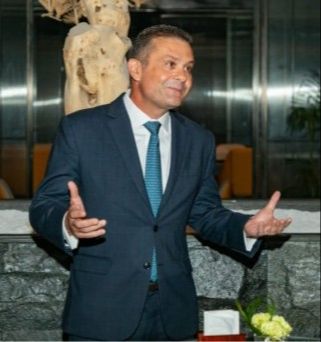

I first met Andrew when he facilitated a two-day Executive Leadership Team workshop.
What struck me was his absolute honesty, application, and skill in managing quite a diverse group of leaders through his presence, honesty, and great intelligence."
— David Jordan, Executive Vice President
Why your CEO cannot lead this process
This is the piece of advice that most CEOs resist and then, having tried to facilitate their own ELT development and watched it fail, eventually accept.
When the person running the process is also the person who controls every other participant's career, compensation, and continued employment, the conversations that transformation requires do not happen. ELT members present the version of themselves the CEO needs to see. Peer dynamics stay polished. The real issues — the communication breakdown between two CXOs, the executive whose leadership style is constraining their team's output, the unspoken concerns about the CEO's own blind spots — remain unspoken.
Effective ELT facilitation requires someone who can challenge the CEO without consequence. Who can name what is happening when a CFO is grandstanding or when a COO's apparent agreeableness is actually conflict avoidance?
Who can sit with the discomfort of a difficult conversation without any personal stake in how it resolves? That is not a skill set the CEO can perform on their own behalf, no matter how emotionally intelligent or self-aware they are.
External facilitation is not a nice-to-have in executive leadership team development. It is a structural prerequisite for the conversations that actually produce change.
How Andrew works with Executive Leadership Teams
Every engagement begins with a diagnostic — not a survey sent to inboxes, but a structured process of individual conversations with each ELT member, assessment of the current team dynamics, and a frank discussion with the CEO or board sponsor about what the data shows and what it means.
From there, engagements are built around the specific team, its context, and its challenges. There is no off-the-shelf program. What is consistent across every engagement is the integration of individual self-leadership development with collective team dynamics — because high-performing executive teams are not built by addressing the group while leaving individual behavior unchanged. Each member's self-awareness, self-regulation, and capacity for honest self-learning are as much a part of the work as the group's shared norms and structures.
A typical engagement includes:
- Diagnostic assessment of individual leadership styles and current team dynamics, providing a clear baseline from which to measure progress
- Facilitated sessions — monthly over six to eighteen months, designed around real business challenges rather than workshop simulations
- Individual executive coaching for members who need specific support alongside the group work
Real-time integration — observation and feedback during actual ELT meetings, not just dedicated development sessions - Measurement framework — tracking behavioral change and business outcomes throughout the engagement so that progress is visible and accountable
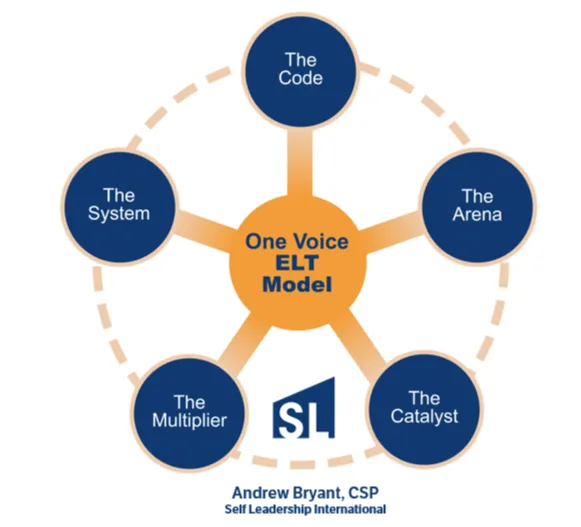
The Result is an ELT Speaking with One Voice
Tangible results include:
A Code: Shared, above-the-line behaviors that every member owns and is held accountable to. Not values on a wall. A living agreement.
An Arena: The psychological safety for senior leaders to be authentic, to surface real challenges, and to give and receive support without fear. Paradoxically, vulnerability at the top creates strength in the team.
A Catalyst: The conditions for ideas to be genuinely built upon, not just tolerated. When differences are understood and valued, collective intelligence multiplies.
A System: A Leadership Operating System that answers the questions most ELTs avoid: When do we meet? Who decides what? What are we communicating, and to whom? Getting intentional about the process frees up energy for the work that actually matters.
The goal is One Voice. Not groupthink. Not a PR front.
One Voice means the ELT has aligned on what the company stands for and has the trust and clarity to lead it together, even when they disagree behind closed doors.
When this happens, culture doesn't need to be enforced. It's multiplied.
"Andrew Bryant enabled us to transform our organization into a holistic, high-performing team. His self-leadership approach helped us to understand ourselves as individuals, leaders, and our roles in the team."
— Marek Dziki, MD, PhD, MBA
Why self-leadership is the foundation of every high-performing ELT
Most approaches to executive team development treat the group as the unit of change. The assumption is that if you improve the team's norms, structures, and communication patterns, individual behavior will follow.
My experience is the reverse. The group is the output. The individuals are the input.
An ELT that contains members who cannot regulate their own emotional reactions under pressure, who cannot acknowledge the limits of their knowledge, or who cannot learn from feedback without becoming defensive will not be transformed by better meeting structures or clearer OKRs. The dysfunction will simply find new forms.
This is why every ELT engagement I lead integrates self-leadership development — the practice of intentionally influencing your thinking, feelings, and actions toward your objectives — at the individual level, alongside collective work. The three competencies of self-leadership are directly applicable to executive team dynamics:
Self-awareness is the capacity to see your own behavior clearly — including the effect it has on the people around you. For an ELT member, this means understanding how their communication style, reaction under pressure, and relationship with uncertainty show up for their peers and teams. Without this, feedback cannot land, and development cannot happen.
Self-regulation is the capacity to choose your response rather than react — to exercise judgment rather than operate on habit under pressure. In an ELT context, this is the difference between the executive who escalates a conflict and the one who holds the space for it to be resolved productively.
Self-learning is the disciplined capacity to recognize what you do not know, seek what you need, and apply it in context — without waiting for someone to structure the development for you. At the ELT level, this is often the competency most urgently needed and least systematically developed.
When these three competencies are operating across an executive team, the dynamics described earlier — the Ignorant Certainty, the conflict expressed as silence, the workgroup performing team — become structurally less likely. Not impossible. But significantly less likely.
Learn more about the self-leadership framework →Questions About Executive Leadership Team Development
How long does executive leadership team development take?
What makes this different from a team-building program?
What industries does Andrew Bryant work with?
How do we know if our ELT needs external development support?
Ready to find out whether your ELT is a team?
If you are a CEO who recognizes your executive team in these descriptions, or a board member or Chief People Officer concerned about the dynamics at the top of your organization, the most useful thing I can offer is a direct conversation.
I have spent twenty-five years facilitating ELT development across forty countries, working with C-suites in billion-dollar enterprises and high-growth startups, in cultures as different as Singapore and São Paulo and Stockholm. I will give you an honest assessment of what I see and whether external facilitation is the right lever for your situation. If it is not, I will tell you that too.
No proposal before a conversation. No generic methodology is presented as a solution before we understand your problem.
Book a Complimentary 30-Minute Consultation →