
The Neuroscience of Self-Awareness: Why Leaders Who Know Themselves Read Others Better
Aug 19, 2026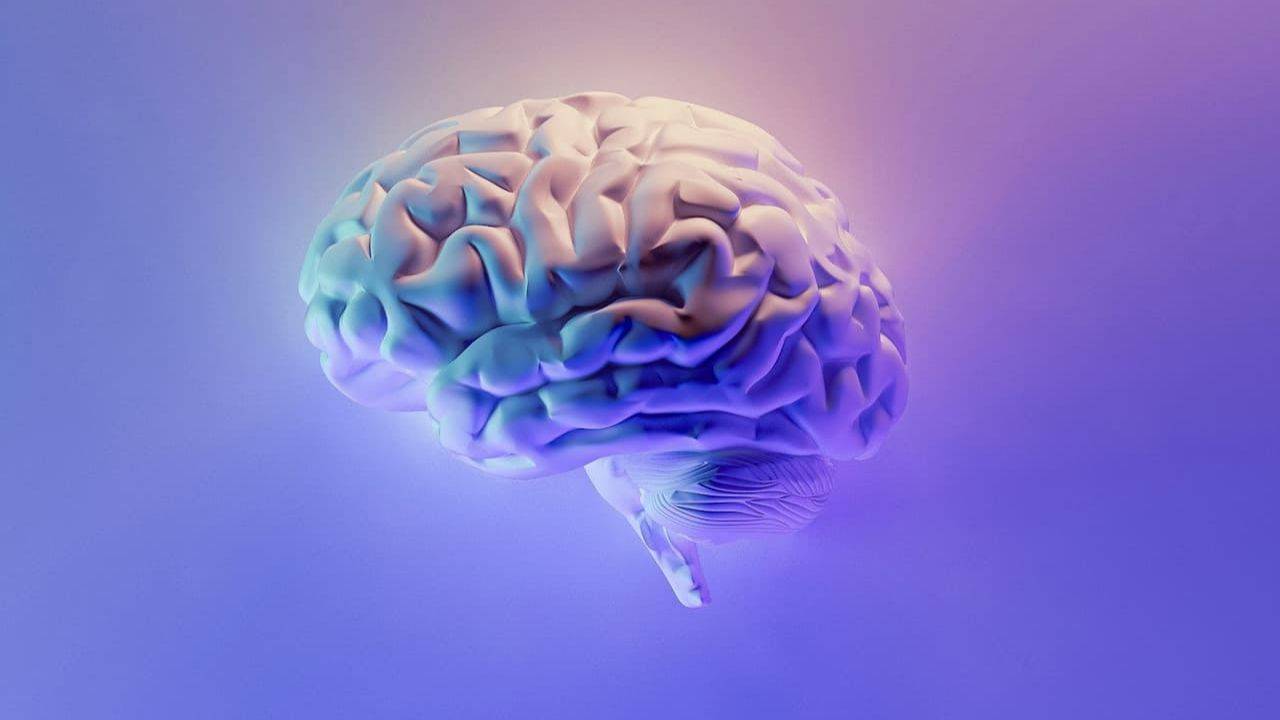
You've felt it. You leave a meeting certain it went well, maybe even pleased with yourself, only to hear later that the room read you completely differently: defensive when you thought you were being direct, dismissive when you thought you were being decisive. Or the reverse. You walk in fully prepared, deliver the pitch exactly as rehearsed, and can't explain why the energy in the room went flat halfway through. Something shifted, and you didn't catch it until it was too late to recover.
Most people file that under bad luck, or write it off as "some people just can't read a room." An early mentor of mine had a different explanation.
People are not logical; they are "psycho-logical."
At the time, I took it as a memorable turn of phrase. Twenty-five years into coaching executives, and after reading a fair amount of the neuroscience literature, I've come to think he was closer to a literal description of the brain than he probably realized, and closer to an explanation for that exact moment in the meeting than either of us knew at the time.
Here's the finding that changed how I think about self-awareness: when researchers scan a brain while a person thinks about their own traits, feelings, and intentions, and then scan the same brain while that person tries to infer someone else's traits, feelings, and intentions, a substantial amount of the activity shows up in the same place. Specifically, the medial prefrontal cortex, the MPFC, lights up for both. Self-understanding and understanding other people aren't run by two separate systems in your head. They share real estate. Which means the moment you misjudged the room wasn't a communication failure. It was a self-awareness one, running on the same circuitry.
Why This Isn't Just a Curiosity

This has been shown often enough, across enough independent studies, that it's no longer a fringe finding. Reviews of the literature describe the MPFC as consistently implicated in both self-referential and other-referential thought, and a 2022 study using multivoxel pattern analysis, a technique that can distinguish overlapping brain signals with much finer resolution than earlier methods, confirmed that self- and other-related processing are genuinely intertwined within this region, not just occurring near each other by coincidence.
But the finding I find most useful for actual leadership development isn't the anatomy. It's a study by Böckler and colleagues, published in 2017, that went a step further than mapping overlap. They tested whether training someone's capacity to understand their own thoughts and feelings would change their ability to accurately read someone else's. It did. Enhancing self-understanding increased the ability to infer other people's mental states.
That's not a correlation. That's a training effect. If self-awareness and social awareness genuinely draw on shared neural machinery, then deliberately building one should improve the other, and that's precisely what the research found. The moment in the meeting that stung isn't a fixed trait you either have or don't. It's a skill gap, and skill gaps close.
What This Means for How Leadership Is Actually Taught
Most leadership development I've encountered treats these as two separate curriculum items. There's a module on self-awareness, usually a personality assessment and some reflection exercises. Then, often much later, there's a separate module on "reading the room," stakeholder empathy, or emotional intelligence toward others.
The neuroscience suggests that's an artificial split. If the brain doesn't strongly separate self-understanding from other-understanding, then training them as unrelated skills means doing twice the work to get at what is, in fact, a single underlying capacity.
This is exactly the premise I built self-leadership around, well before I had the neuroscience literature to point to: self-awareness is the foundational layer on which everything else in leadership sits. Not because it's a nice personal-growth idea, but because, mechanically, it appears to be the same system you use to read your boss, your team, and the person across the negotiating table.
Where This Shows Up as Executive Presence
My own definition of executive presence has always had two halves: projecting confidence and gravitas under pressure, and being able to read the room well enough to actually influence it.
Most people treat those as different skills, one about how you come across, the other about how well you observe. The neuroscience suggests they're not different skills at all. Gravitas under pressure depends on self-regulation, which depends on self-awareness. Reading the room depends on the same self-awareness, pointed outward. When an executive's presence problem shows up as "they don't read the room well," the root cause is often the same self-awareness gap that's also undermining their composure, not two separate deficits that happen to coincide.
What I See When I'm Coaching
I've spent over two decades watching this play out in practice, long before I could point to a specific paper explaining why. Executives who genuinely don't know their own trigger points- the meetings where they get defensive, the feedback that makes them shut down- are consistently the same executives who misread a room. They'll walk out of a tense stakeholder meeting convinced it went well, when everyone else in the room could see it hadn't. It's the same moment I opened with, and I've watched it happen from the outside enough times to know how disorienting it is from the inside. Once we do the self-awareness work, journaling, structured 360 feedback, the specific practices I cover in Self-Awareness at Work, the shift in how accurately they read other people tends to show up faster than I'd expect if the two skills were truly independent.
This also connects directly to executive function. Self-awareness and social awareness both draw on working memory and cognitive flexibility, the same capacity that gets strained under fatigue and overload. It's part of why a leader who reads a room brilliantly on a good day can miss the same signals entirely at the end of an exhausting week. The neural resources for both are shared and depleted.
It's also the same diagnostic gap underneath a pattern I see constantly in leaders who think of themselves as selfless: the servant leader who never developed enough self-awareness to notice they're absorbing everyone else's stress rather than actually serving anyone. I trace that specific failure mode in Self-Leadership vs. Servant Leadership.
The Practical Case for Treating This as One Skill
If you're building a leadership development program, or thinking about your own growth, the implication is straightforward: don't treat self-awareness as a warm-up exercise before the "real" interpersonal skills training starts. Treat it as the direct path to the interpersonal skills themselves.
A few practical shifts that follow from this:
- Pair self-reflection with people-reading practice, not sequence them. A leader working on noticing their own reactive patterns is, mechanically, exercising the same capacity they'll need to notice someone else's.
- Don't treat "soft skills" as separate from cognitive training. Reading people is not a personality trait some leaders happen to have. It's a trainable capacity that improves when you deliberately train self-awareness.
- Expect fatigue to hit both at once. If a leader is unaware of their own patterns under stress, they're very likely also unaware of everyone else's.
There Is No Shortcut, Only Evidence
None of this makes self-leadership mystical. If anything, it makes it more mechanical than most people assume. This is why, as a leadership speaker, I've started bringing this research directly into the room with executive audiences.
Self-leadership isn't a soft, aspirational add-on to real leadership development. It's the practical, trainable application of what neuroscience has been demonstrating for the better part of two decades: that leading yourself and reading others are not two separate jobs. They're one job, viewed from two directions.
My mentor was right. People are psycho-logical. It turns out the brain agrees with him. And the meeting that went sideways on you wasn't bad luck. It was a skill you hadn't built yet.
Frequently Asked Questions
Is there a neuroscience basis for self-awareness improving your understanding of other people?
Yes. Neuroimaging research has repeatedly found that the medial prefrontal cortex (MPFC) is active in both self-referential thought (thinking about your own traits, feelings, and intentions) and other-referential thought (inferring someone else's). The two processes share substantial neural territory rather than running on separate systems.
Does becoming more self-aware actually make you better at reading other people?
Research by Böckler and colleagues (2017) found that enhancing a person's capacity to understand their own thoughts and feelings increased their ability to accurately infer others' thoughts and feelings. The two skills aren't just correlated; training one appears to improve the other.
What part of the brain is responsible for self-awareness?
No single region acts alone, but the medial prefrontal cortex (MFPC) is the most consistently implicated area across studies, working alongside regions like the posterior cingulate cortex and insula. Self-awareness is better understood as a network property than a single brain center.
Why does this matter for leadership development?
Most leadership development treats self-awareness and social awareness (reading the room, understanding a stakeholder's real objection) as separate skills taught in isolation. The neuroscience suggests they're the same underlying capacity, applied in two directions. Deliberately training self-awareness is a direct, evidence-based path to reading others better, not a soft prerequisite for it.
Is "reading the room" part of executive presence, or a separate skill?
It's part of executive presence directly: the ability to project confidence and gravitas under pressure, combined with the ability to read the room so you can actually influence the people in it. The neuroscience suggests this isn't a bolt-on skill. It draws on the same self-awareness machinery as gravitas and composure do, which is why executive presence problems so often trace back to a self-awareness gap rather than a communication one.
Turn Insight Into ActionReading about leadership can change what you know.Self-leadership changes what you do.Develop your leadership effectiveness → Explore Self-leadership Discover your leadership strengths & gaps → Choose an Executive Coach Unlock the potential of your team → Workshops & Masterclasses Ignite your event or conference → Book Andrew Bryant as your Leadership Speaker "Prescription without diagnosis is malpractice" |