
The Best Tools for Self-Leadership (And Why Most Apps Don't Work)
Aug 12, 2026
Nearly half of people who download a habit-tracking app quit within sixty days. Not because they lack discipline. Because the app was never the thing doing the work. A checkbox does not build a habit. Practice does.
I say this as someone who is constantly asked which app I recommend for building self-leadership. My honest answer disappoints people at first: the tool that has worked best for my clients over the past 25+ years is not software. It is a handful of structured exercises you can do with a notebook and ten minutes. Below are three straight from my latest book, POTENTIAL-IZE (Wiley, 2026), followed by the apps actually worth your time if you want to add tracking on top.
Start Here: Three Exercises From POTENTIAL-IZE
The Potential Proprioception Check
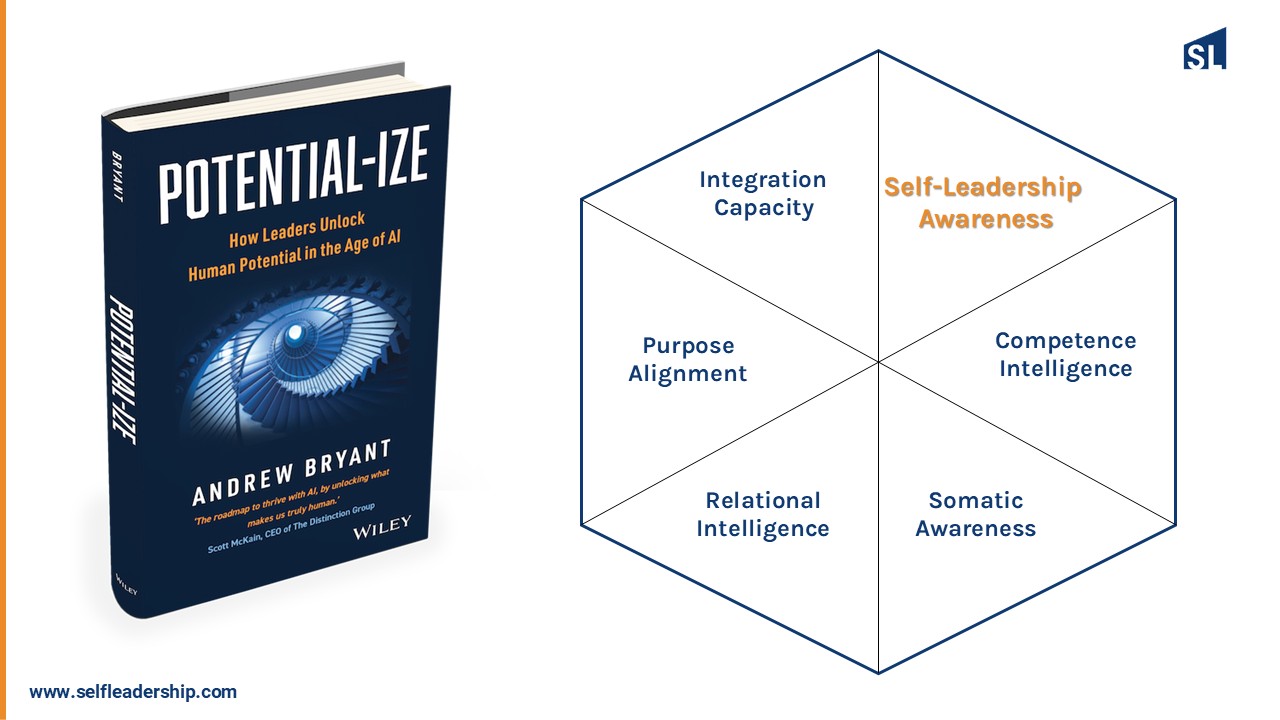
Think of your potential the way a pilot thinks about a dashboard. You are not flying blind. You have instruments. This exercise asks you to rate yourself, honestly, across six dimensions: self-leadership awareness, competence intelligence, somatic awareness, relational intelligence, purpose alignment, and integration capacity. Score each one to ten, not on how you wish you scored, but on where you actually are. The value is not in the number. It is in the pattern. High purpose alignment paired with low competence intelligence tells you something specific: you know what matters; you just have not built the skill yet. Do this monthly, and you will catch drift long before it becomes a crisis.
The Competence-First Audit
A four-week practice for anyone stuck chasing passion instead of building skill. Week one, identify three abilities worth developing, ones that are valuable to others, hard for AI to replicate, and buildable through practice.
Week two, baseline yourself honestly and use AI tools to accelerate the learning curve, research, practice reps, and feedback.
Week three, find one way to put the developing skill to use for someone else.
Week four, track how your engagement has shifted. The insight behind this one matters as much as the steps: passion follows competence, not the other way around. Most people wait to feel passionate before they start practicing. It rarely works in that order.
Learn to Ride Your Dragon
For whenever AI, or any fast-moving change, has you feeling more threatened than curious.
Name the specific thing you are avoiding. Get honest about whether the fear is really about losing control, identity, or relevance, because those three feel identical from the inside but need different responses.
Then complete one sentence: if I could collaborate with this instead of fearing it, I could ________. That single reframe has moved more of my coaching clients off the sidelines than any amount of reassurance from me ever did.
You will find the full versions of these, and the frameworks behind them, in POTENTIAL-IZE.
Notice how much of that involves AI, used deliberately rather than left to run the show. If that distinction is useful, I go deeper on where AI helps self-leadership and where it quietly undermines it.
If You Want an App: Three Worth Trying
Software has a place, but only after the practice above is already running. Here is why that order matters: most habit and tracking apps fail for the same reason: people load them up with eight or ten habits on day one and abandon the whole thing within two weeks. The fix is not a better app. It is fewer habits, tracked consistently, with the app as a witness rather than the whole system.
Streaks. A simple habit tracker, deliberately limited to a small number of habits at once. That constraint is a feature. It forces the same discipline the Competence-First Audit asks for: pick a few things, not everything.
Reflectly. An AI-guided journaling app. Useful for the reflection component of self-learning, especially on days when a blank page feels harder than it should.
RescueTime. Runs quietly in the background and shows you where your time actually goes, not where you assumed it went. Pairs well with the Potential Proprioception Check's integration capacity dimension. Most people are shocked by the gap between the two.
Want a Formal Assessment Instead?
Everything above is self-guided. If you want a validated instrument with a proper report rather than a self-rating exercise, that is a different tool for a different job. Take a look at the Self-Leadership Diagnostic.
Pick one exercise. Do it this week. Add an app only once the exercise has stuck.
Turn Insight Into ActionReading about leadership can change what you know.Self-leadership changes what you do.Develop your leadership effectiveness → Explore Self-leadership Discover your leadership strengths & gaps → Choose an Executive Coach Unlock the potential of your team → Workshops & Masterclasses Ignite your event or conference → Book Andrew Bryant as your Leadership Speaker "Prescription without diagnosis is malpractice" |