
The 5 R's, the 7 C's, and Every Other Leadership Alphabet That's Quietly Failing You
Jul 27, 2026
Search "the 7 C's of leadership," and you will find at least four completely different lists, each one presented as the definitive answer. One version gives you Character, Communication, Courage, Collaboration, Consistency, Conviction, and Competence. Another swaps in Connection, Cognition, and Compassion. A third replaces half of those again. Search the 5 R's and the disagreement gets even messier: no two sources can agree on what the R's even stand for.
Nobody has bothered to notice that the frameworks contradict each other, because nobody is actually using them. They are search results, not tools. They exist to rank, not to work.
That is the tell. A real framework survives contact with practice. It gets argued about, refined, stress-tested, and it converges toward something people actually recognize in each other. An acronym that has four unrelated "definitive" versions floating around the internet was never tested against anything. It was built backward from a memorable letter, not forward from an observation about how leaders actually behave.
I have spent 25 years coaching executives across 40 countries, and not one of them has ever asked for a session because they forgot the 7 C's. They call me because they feel overwhelmed by the decisions they need to make. They can read a room but can't regulate their own reaction to it. They know exactly what good leadership looks like, yet still cannot do it under pressure.
That gap, between knowing and doing, is not solved by a better acronym. It is solved by working on the person doing the leading.
I caught myself doing exactly this once, in a much older piece on what leading across cultures actually takes. I'd built a tidy "5 C's" out of one executive's frustrated list of criteria. I've since rewritten it around the same three drivers instead; see "What Global Leadership Actually Requires" for what that reframe looks like in practice.
Why the alphabet approach keeps failing
Leadership memes and mnemonics fail for the same reason a universal prescription fails a patient it was never examined: they assume leadership is a fixed checklist you apply the same way to every room, every crisis, every person you're responsible for. It isn't.
A prescription without a diagnosis is malpractice, and that's exactly what a generic seven-word list is. It tells you nothing about the specific gap in front of you.
Leadership is contextual. What a leader needs in a boardroom negotiating a merger is not what they need managing a team through a layoff, and neither of those is what they need on a factory floor at 2 am when something has gone wrong. No seven-word list survives contact with that range of situations, because it was never built to diagnose anything. It was built to be memorable.
And leadership is an inside-out process, not an outside-in checklist. You cannot bolt "Courage" or "Compassion" onto a leader who has not first developed the self-awareness to know where they are avoiding a hard conversation, or the self-regulation to stay level when the pressure is real, or the self-learning to update their approach when it stops working. Skip that foundation and the acronym becomes a performance. You can recite "Character" in a workshop and still fail to embody it back at your desk an hour later, because nothing about reciting a list changes how you actually operate under pressure.
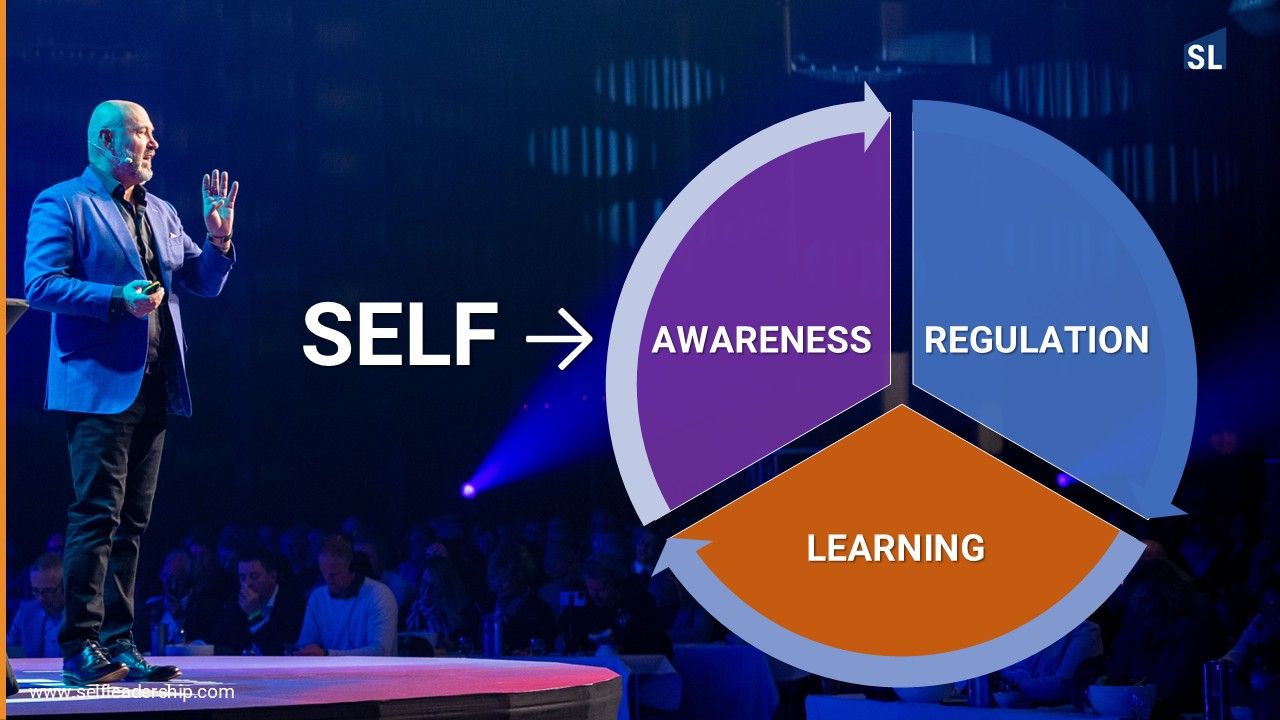
This is the self-leadership research-backed distinction I built my work around with Dr. Ana Kazan. I developed the Three Driver Model of self-leadership: self-awareness, self-regulation, and self-learning. Three competencies, not seven virtues to memorize. They are not a checklist you tick off once. They are the operating system beneath every other leadership behavior, the thing that determines whether "Communication," "Compassion," or any other C actually shows up when it counts, or just sits on a slide.
What to do instead of memorizing another list
Stop collecting frameworks and start diagnosing your actual gap. Where do you already know what good leadership looks like and still fail to do it? That question will tell you more about your leadership than any acronym, because it points you at the one thing every mnemonic skips: you.
I have traveled the world giving keynote leadership speeches and leadership workshops to leaders of complex multinationals and disruptive Silicon Valley Startups.
If you want the deeper version of this argument, including how it applies specifically to leading in the AI era, that is what I built the IGNITE Framework and POTENTIAL-IZE to address this.
If you want to discuss developing leadership in your organization, then contact me.
FAQ
What are the 5 R's of leadership?
There is no single agreed version. Different sources list entirely different words, and none of the competing lists has gained consensus. That inconsistency is itself the point: a framework nobody can agree on doesn't describe something real about leadership; it's search-optimized content dressed up as a model.
What are the 7 C's of leadership?
At least four different "definitive" versions exist online, variously including Character, Communication, Courage, Collaboration, Consistency, Conviction, Competence, Connection, Cognition, and Compassion, depending on which source you land on. When a framework has this many competing versions, it has no empirical backing, just a catchy letter.
If leadership mnemonics don't work, what actually does?
Leadership is contextual and develops from the inside out. The research-backed foundation is self-awareness, self-regulation, and self-learning, the three drivers of self-leadership. These aren't traits to recite; they're the capacities that determine whether any other leadership behavior- communication, courage, compassion- actually shows up when the pressure is real.
Turn Insight Into ActionReading about leadership can change what you know.Self-leadership changes what you do.Develop your leadership effectiveness → Explore Self-leadership Discover your leadership strengths & gaps → Choose an Executive Coach Unlock the potential of your team → Workshops & Masterclasses Ignite your event or conference → Book Andrew Bryant as your Leadership Speaker "Prescription without diagnosis is malpractice" |