The Future of Work Isn't a Skills Gap. It's a Self-Leadership Gap.
Aug 24, 2026
Last updated: September 3, 2026
The Investment is There, But the Agility Isn't.
Most reskilling strategies are built the same way: identify the skills gap, buy or build the training, launch the program, and track completions. It's a reasonable plan, and it's why so many CHROs can point to strong course completion numbers yet still can't answer the question when their CEO asks, "Has this changed what our workforce can do?"
SHRM's research puts a number on the gap. More than half of organizations (53%) say upskilling and reskilling are a priority. Only about one in five (21%) believe they're actually doing it effectively. That's not a content problem. Companies are not short on courses, platforms, or AI literacy modules. It's an adoption and adaptation problem, and adoption isn't something you can buy more of.
The Real Diagnosis Isn't Lack of Awareness
The Adecco Group's 2026 Business Leaders Research, surveying CHROs across 13 countries, found something sharper than a generic skills gap. Only 5% of CHROs say their organization has fully embedded learning into performance, trust, and business outcomes. And it's not because leaders don't see the priority: upskilling and reskilling at scale ranks as the #2 people-strategy priority for CHROs this year.
The research names the actual stall: an unresolved ambiguity over who owns development. Employees expect the organization to manage their growth. Organizations expect employees to own it. Nobody has actually decided which is true, and that ambiguity, not a lack of urgency or budget, is what keeps capability investment from turning into capability.
This is a powerful insight because it reframes the whole problem. If ownership of the development is ambiguous, no amount of course content can fix it. What's missing is the individual capacity to take ownership, to notice a gap, protect time to close it, and keep learning without being told to. That's not a training problem. That's a self-leadership problem.
Employees Owning Their Development Is a Symptom, Not the Whole Story
Forbes columnist Nirit Cohen has written about a related dynamic: the difference between infrastructure a company grants an employee (a training budget, a mentor, an internal opportunity) and infrastructure the employee actually owns (skills, habits, and proof of capability that travel with them regardless of who's in the room). Her point is that granted infrastructure depends entirely on someone else's ongoing goodwill, which makes it structurally fragile.
That distinction is a useful diagnostic, not the whole answer. An organization can't outsource its reskilling strategy to the hope that employees will privately go build their own capability. The real design question for a CHRO is different: how do you build an organization where people are equipped and expected to own their development, rather than waiting for permission or a training calendar to tell them it's their turn?
Self-Leadership as Organizational Infrastructure
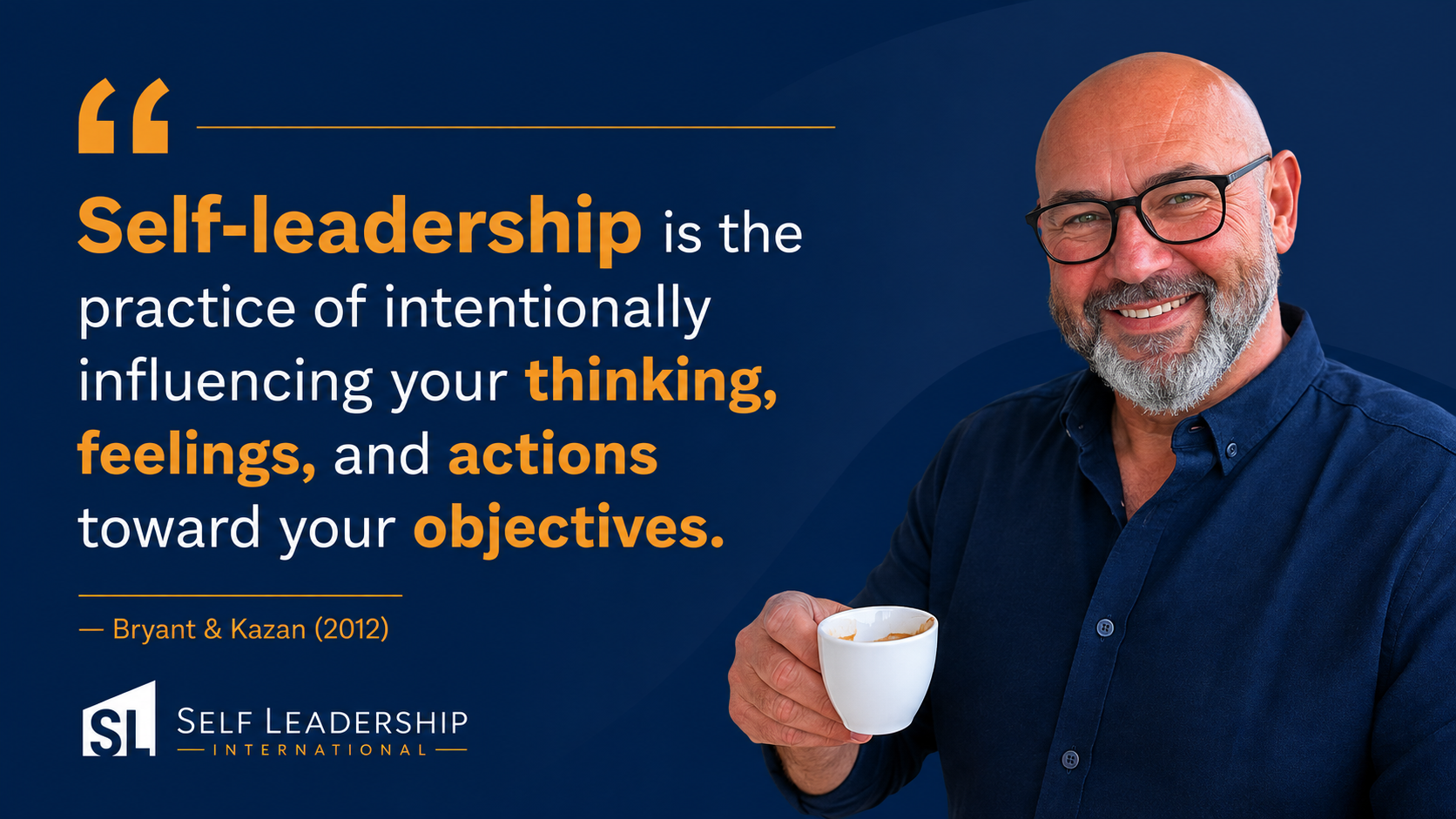
Self-leadership, the practice of intentionally influencing your own thinking, feeling, and actions toward your objectives (Bryant & Kazan, 2012), is usually discussed as an individual trait. Treated that way, it's not something a CHRO can build to scale. The Three-Driver Self-Leadership Model can scale capability through 3 specific, coachable components.
Self-awareness is what lets someone notice a skill gap before it shows up as a missed deadline or a stalled project. Organizations can build this deliberately, through structured feedback, coaching, and manager conversations that surface gaps early rather than at the annual review.
Self-regulation protects time for learning under pressure, rather than learning being the first thing cut when the quarter gets busy. This is as much a culture-and-management-behavior question as an individual one: what gets modeled, rewarded, and protected by the people someone reports to.
Self-learning is the capacity to diagnose your own development needs and close them on your own initiative, rather than waiting for a course to be assigned. This is the capability that actually determines whether a reskilling investment compounds or expires the moment the formal program ends.
None of these are personality traits fixed at the time of hiring. They're developable, and they're the layer that determines whether every other part of a future-of-work strategy, new tools, new skills frameworks, new career architecture, actually produces adaptability instead of just activity.
What It Costs to Get This Wrong
The cost isn't abstract. Programs that don't build this layer produce exactly the pattern SHRM and Adecco both describe: investment without adoption, urgency without embedded capability, and a workforce that completes training without becoming more agile. Separately, LinkedIn's research found that 94% of employees say they'd stay longer at a company that invests in their development, which means the retention upside of reskilling is real. It just doesn't show up if the investment doesn't end up being something employees actually own and use.
The Future of Work Framework: IGNITE and the Potential-ize Formula
My 2012 book, Self Leadership: How to Become a More Successful, Efficient, and Effective Leader from the Inside Out (McGraw-Hill), addressed both the individual and organizational benefits of self-leadership, and has since been referenced in over 200 research papers. Since its publication, the need for developing self-leadership as the foundation for all other capabilities has only increased.
In 2026, Wiley published my fifth book, POTENTIAL-IZE: How Leaders Unlock Human Potential in the Age of AI. The book includes the IGNITE framework and a formula for scaling potential (Potential = Capacity × Opportunity × Willingness).
Capacity and willingness are for the individual to build. Opportunity is what the organization controls. Most future-of-work strategies invest heavily in opportunities, new roles, new tools, and new pathways, while assuming that capacity and willingness will simply follow. They don't, unless self-leadership is deliberately built alongside them.
If your organization is investing in reskilling and still not seeing the agility it should be producing, that's usually where to look first.
I work with executive leadership teams and HR functions to address this exact gap through Leadership keynotes, Self-leadership Workshops, and Executive Coaching built around the self-leadership framework. If this is a live question for your organization, I'd welcome the conversation.
Frequently Asked Questions
Why do reskilling programs fail to produce workforce agility?
Most reskilling strategies focus on skills content, courses, tools, and certifications, assuming adoption will follow. Research from the Adecco Group's 2026 CHRO survey found the real stall is an unresolved ambiguity over who owns development, the organization or the employee, not a lack of urgency or content.
What is self-leadership in the workplace?
Self-leadership is the practice of intentionally influencing your own thinking, feeling, and actions toward your objectives. In an organizational context, it's the capability, built through self-awareness, self-regulation, and self-learning, that determines whether an employee actually owns their own development rather than waiting to be told what to learn next.
How can CHROs build self-leadership at scale?
Treat it as a coachable capability rather than a fixed trait: build structured feedback and coaching that surfaces skill gaps early (self-awareness), protect learning time through management behavior and culture rather than treating it as optional (self-regulation), and design development systems that reward employee-initiated learning rather than only compliance-driven training (self-learning).
What is the IGNITE framework?
IGNITE is Andrew Bryant's framework, developed in POTENTIAL-IZE, for building human capability in the age of AI. It works alongside the Potential-ize Formula (Potential = Capacity x Opportunity x Willingness) to address the two variables an organization can develop directly in its people, capacity and willingness, rather than only investing in opportunity.
What does self-leadership have to do with the future of work?
Self-leadership is the missing layer in most future-of-work strategies. Organizations invest heavily in new tools, roles, and reskilling programs, the opportunity variable, but assume employees will automatically build the capacity and willingness to use them. Self-leadership is what actually makes people take ownership of their own development, which research shows is the real stall point, not a lack of urgency or budget.
Turn Insight Into ActionReading about leadership can change what you know.Self-leadership changes what you do.Develop your leadership effectiveness → Explore Self-leadership Discover your leadership strengths & gaps → Choose an Executive Coach Unlock the potential of your team → Workshops & Masterclasses Ignite your event or conference → Book Andrew Bryant as your Leadership Speaker "Prescription without diagnosis is malpractice" |