Why Conference Audiences Are Getting Tired of AI Keynotes (And What They Want Instead)
Jul 20, 2026
Seventy-two percent of conference attendees say the keynote speaker is the single reason they decide whether to come back next year. That number should worry every event planner currently booking "AI expert" after "AI expert" and hoping the novelty carries the room.
It won't. Not anymore.
For the last three years, AI keynotes ran on shock value. Show the audience what the technology can do, let them gasp, collect the applause. That formula is dying in 2026. I'm hearing it directly from meeting planners: the disruption-and-displacement narrative has worn out its welcome. Their people have already lived through it. What they're asking for now is different. Not "what can AI do," but "what do we do with it, and who do we need to become to use it well."
That question is not a technology question. It's a self-leadership question, and most speakers on the AI circuit are not equipped to answer it.
The gap nobody's addressing on stage
I've spent nearly three decades working with executives, and the pattern I see right now is almost identical to something I learned early in my career, back when I was still working in physiotherapy. A prescription without a diagnosis is malpractice. You don't hand someone a treatment plan before you understand what's actually wrong.
Most organizations are doing exactly that with AI. They're rolling out tools, mandating adoption, running "AI transformation" workshops, and skipping the diagnosis entirely: are our people actually equipped, psychologically and behaviorally, to work alongside these tools without losing judgment, ownership, or morale? Rolling out the tool is the easy part. Building the human capacity to use it with discernment is the part nobody wants to slow down for.
That's the gap I address in my latest book, POTENTIAL-IZE (Wiley, 2026), and it's the gap I now spend most of my keynote conversations addressing. Not "adopt AI faster." Ask a harder question: who is driving, you or the tool?
What Keynote Topics are Working Now?
A few things I'm watching closely as I plan my 2026 and 2027 calendar, drawn from what event organizers and audiences are gravitating toward:
The tone has shifted from fear to agency. Audiences are past the "AI will take your job" phase. They want frameworks for staying the one making the decisions, not the one being decided for.
Generic AI overviews are losing ground to specificity. Sector-specific, role-specific, and outcome-specific content is outperforming broad "future of work" talks. This is part of why I tailor the Co-Pilot Economy talk differently for a leadership team than for a marine sector or aviation audience, rather than delivering the same deck everywhere.
"Agentic AI" is changing the leadership conversation again. As tools move from answering questions to taking autonomous action, the judgment question gets sharper, not softer. Delegation, oversight, and accountability are becoming leadership skills in a way they weren't three years ago.
Trust and human connection are re-entering the brief. Planners are asking for content that reconnects teams to each other, not just to their software.
None of that is a technology conversation. It's a leadership and, more specifically, a self-leadership conversation, applied to a new context. Which is precisely why I think the next eighteen months are the strongest window I've had in years to bring this message to stage.
The Keynote Speech for 2026 and 2027
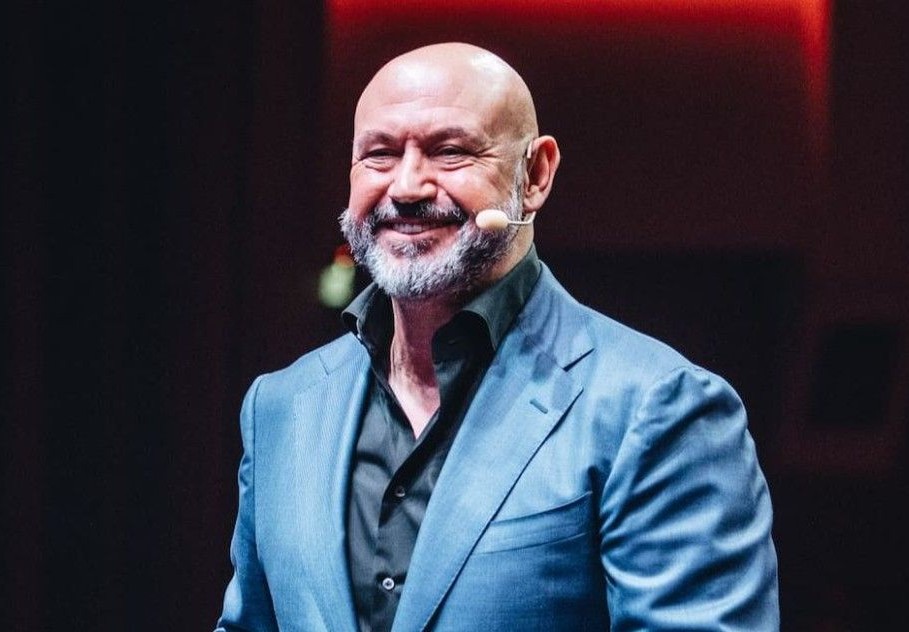
If you're programming a conference in this window, here's where I'd point you, depending on what your audience actually needs:
- The Co-Pilot Economy — for teams learning to work alongside AI without losing their edge or their accountability.
- POTENTIAL-IZE — built around the IGNITE framework, for organizations that want a practical formula for turning capability into performance, not just another motivational hour.
- Owning the Unknown — for leaders navigating change and ambiguity that has nothing to do with algorithms and everything to do with how humans hold up under pressure.
Each of these starts from the same place: the technology isn't the bottleneck. The human operating system underneath it is. That's the diagnosis most organizations skip, and it's the one I spend my time on stage helping them make.
If you're planning a 2026 or 2027 event and want to talk through which of these would best fit your audience, get in touch about a keynote.
Turn Insight Into ActionReading about leadership can change what you know.Self-leadership changes what you do.Develop your leadership effectiveness → Explore Self-leadership Discover your leadership strengths & gaps → Choose an Executive Coach Unlock the potential of your team → Workshops & Masterclasses Ignite your event or conference → Book Andrew Bryant as your Leadership Speaker "Prescription without diagnosis is malpractice" |