
Self-Leadership Theory to Practice: Understanding Manz & Neck and My Applied Approach
Nov 21, 2025
Last updated: August 18, 2026
When psychologists or learning and development professionals ask me about self-leadership, they often want to know whether my work differs from or builds on the academic foundations laid by Dr. Charles C. Manz and Dr. Christopher P. Neck. It's a great question, and the answer reveals how this field has evolved from theory into something leaders can actually use every day.
Let me be clear: I have tremendous respect for Manz and Neck. They laid the theoretical foundation that makes all modern self-leadership possible. But what I've done over the past 25-plus years is take that foundation and transform it into a practical methodology that executives and organizations can implement immediately.
The Academic Foundation: What Manz and Neck Contributed
Back in the 1980s, Dr. Charles Manz introduced the concept of self-leadership as a process of influencing yourself to establish the self-direction and self-motivation needed to perform. He later expanded this work with Dr. Christopher Neck, creating a model built on three pillars:
Behavior-focused strategies like self-goal setting, self-observation, and self-reward.
Natural reward strategies that reframe tasks to make them inherently satisfying.
Constructive thought pattern strategies, including mental imagery, positive self-talk, and cognitive restructuring.
Their research is solid. It's rigorous and serves as the theoretical backbone for nearly all discussions of self-influence and self-management.
But here's what I noticed working with leaders across 40+ countries: theory alone doesn't create change. People would read about these concepts, nod their heads, and then ask, "Okay, but how do I actually do this in my role as a VP or CEO? How does this help me lead my team through transformation? What does this look like on a Tuesday afternoon when everything's on fire?"
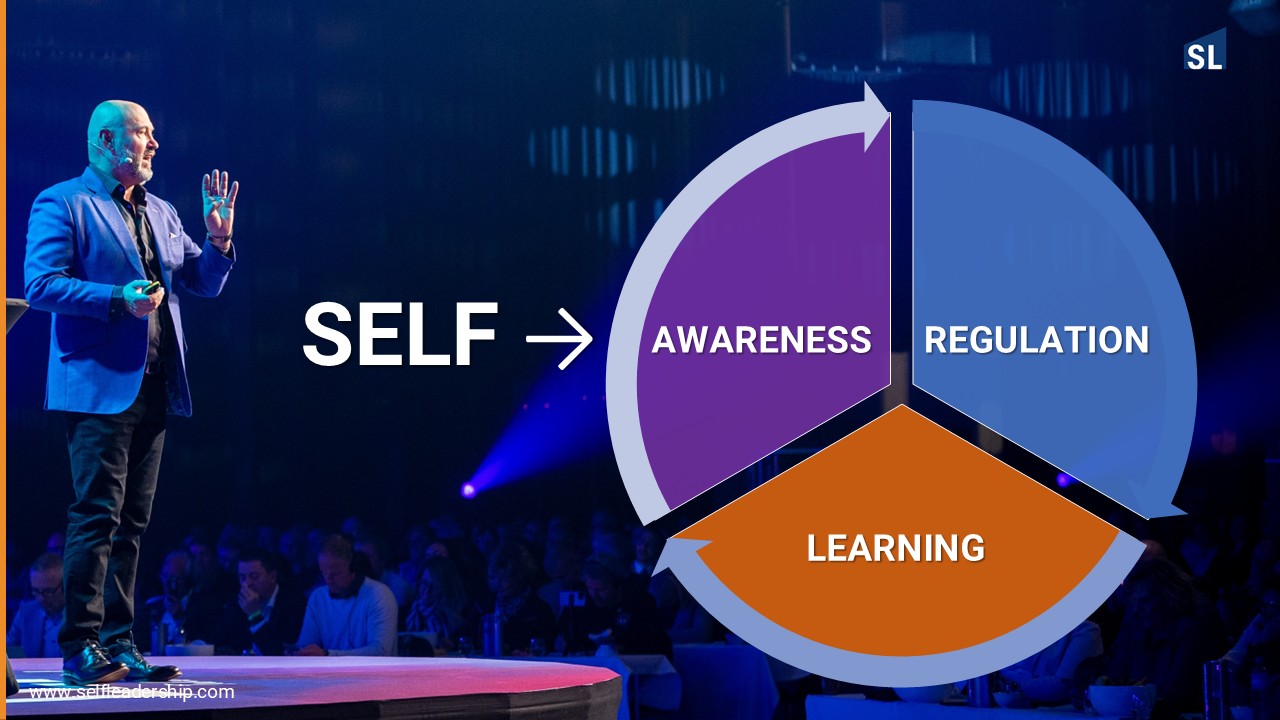
Where Practice Meets the Real World
That's where my work comes in. With my co-author, Dr. Ana Kazan, we define self-leadership as the practice of intentionally influencing your thinking, feeling, and actions toward your objectives.
Notice the difference? It's not just about internal processes. It's about agency, responsibility, and intentional behavior in the context of real leadership challenges.
Over two and a half decades, I've worked with thousands of leaders across organizations such as Microsoft, Singapore Airlines, Red Hat, and Credit Suisse. I've delivered keynote speeches and leadership off-sites around the world. And what I've learned is that self-leadership only becomes powerful when you can translate it into immediate action.
How My Approach Differs
While Manz and Neck focused on the psychological mechanisms, I focus on the leadership outcomes. My methodology integrates:
Mindset and identity coaching that helps leaders understand who they need to become, not just what they need to do.
Responsibility frameworks that put personal accountability at the center of every leadership challenge.
Executive presence development: self-leadership isn't just internal; it's about how you show up and influence others.
Communication and influence skills that turn self-awareness into organizational impact.
Personal transformation models, such as my IGNITE framework, provide a step-by-step process for sustainable change.
This isn't about rejecting the academic foundation. It's about building on it.
Manz and Neck explain why self-leadership works. I show how to do it.
Theory Plus Practice Equals Results
It is self-evident that self-leadership is most powerful when theory and practice meet.
The academic model provides the underlying psychological and behavioral structure. My work equips leaders with the tools and behaviors to apply that structure in real-world situations.
Think of it this way. Manz and Neck built the engine. I built the vehicle that gets you where you need to go.
Together, these approaches offer a complete framework: think clearly, act intentionally, lead effectively.
Who Benefits From Each Approach
If you're a researcher, student, or organizational behavior specialist studying the mechanisms of self-influence, start with Manz and Neck. Their work will give you the theoretical depth you need.
If you're an executive, manager, entrepreneur, or leader navigating transformation, uncertainty, or the demands of high performance, my applied methodology, delivered through 1:1 executive coaching, will give you the fastest path to meaningful change.
My clients aren't looking for research papers (although I have been cited in over 200), they're looking for results. They need to influence their teams, drive strategy, navigate complexity, and lead with confidence. That requires more than understanding self-talk and mental imagery. It requires a complete system for personal and professional effectiveness.
Why This Matters Now More Than Ever
We're living in an era of accelerating change, where AI is reshaping how we work, and where leaders need to be more agile and accountable than ever before. Self-leadership isn't a nice-to-have skill anymore. It's the foundation for everything else.
The organizations I work with understand this. They know that before you can lead others, you need to lead yourself. And they know that academic concepts, while valuable, aren't enough. You need a proven, practical system.
That's what I've spent 25 years building. And that's what separates the theoretical pioneers from the modern practitioners who are transforming leadership on the ground, in real time, in real organizations.
The Path Forward
Both approaches matter. Manz and Neck gave us the science. I've given leaders the practice.
If you want to understand the internal mechanisms of self-leadership, read their research. If you want to apply self-leadership to become a more effective leader, work through my frameworks, attend my programs, or explore the resources I've developed at Self Leadership International.
The future of leadership belongs to those who can lead themselves first. And the fastest way to get there is through a methodology tested with thousands of leaders across 4 decades and 40+ countries.
That's the difference between knowing about self-leadership and actually practicing it.
Further Reading: The Original Academic Sources
If you want to go directly to the primary sources rather than a summary, these are the two papers most cited in self-leadership research:
Manz, C. C. (1986). Self-Leadership: Toward an Expanded Theory of Self-Influence Processes in Organizations. Academy of Management Review. The paper that introduced self-leadership as a distinct academic construct.
Neck, C. P., & Houghton, J. D. (2006). Two Decades of Self-Leadership Theory and Research: Past Developments, Present Trends, and Future Possibilities. Journal of Managerial Psychology. DOI: 10.1108/02683940610663097. A comprehensive review of where the field stood after twenty years of research.
Frequently Asked Questions
What is Charles Manz's self-leadership theory?
Charles Manz introduced self-leadership in the 1980s as the process of influencing yourself to establish the self-direction and self-motivation needed to perform. With Christopher Neck, he later expanded it into a three-pillar academic model that remains the theoretical backbone of the field.
What is the self-leadership model?
The self-leadership model, developed by Manz and later expanded with Neck, organizes self-influence into three families of strategy: behavior-focused strategies (self-goal setting, self-observation, self-reward, cue management), natural reward strategies (reshaping tasks to be inherently satisfying), and constructive thought pattern strategies (mental imagery, self-talk, and challenging limiting beliefs).
What are the three self-leadership strategies from Manz and Neck?
Behavior-focused strategies like self-goal setting, self-observation, and self-reward. Natural reward strategies that reframe tasks to make them inherently satisfying. And constructive thought pattern strategies, including mental imagery, positive self-talk, and cognitive restructuring.
How does Andrew Bryant's approach differ from Manz and Neck's academic model?
Manz and Neck's research explains the psychological mechanisms behind self-influence. Bryant's applied methodology, developed with Dr. Ana Kazan, focuses on leadership outcomes: mindset and identity, personal accountability, executive presence, and communication, built for executives to implement immediately rather than study.
What is the difference between self-leadership theory and practice?
Theory explains why self-leadership works; practice is the tested system for actually doing it under real leadership pressure. Researchers and students are usually best served starting with Manz and Neck's academic work; executives navigating real transformation are usually better served by an applied methodology built on top of it.
Ready to move from theory to practice? The Self-leadership Certification Program is now accepting applications. APPLY NOW →
Turn Insight Into ActionReading about leadership can change what you know.Self-leadership changes what you do.Develop your leadership effectiveness → Explore Self-leadership Discover your leadership strengths & gaps → Choose an Executive Coach Unlock the potential of your team → Workshops & Masterclasses Ignite your event or conference → Book Andrew Bryant as your Leadership Speaker "Prescription without diagnosis is malpractice" |