
How to Become a Better Leader
Most leadership advice teaches you what to do in the room. This is about what determines whether an executive can actually do it, when the stakes are real and the board is watching.
Insights from the Global Authority on Self-leadership →

What Actually Makes Someone a Better Leader
In coaching executives for over 25 years across five continents, I've realized an uncomfortable fact: most leadership development doesn't work as it should. Companies spend a fortune on training, and a few months later, people are back to exactly how they led before. Not because the training was bad. Because it targeted the wrong layer.
Leadership skill is a technique problem. How to run a meeting. How to give feedback. How to set a strategy. Self-leadership is the layer underneath: whether you actually do those things when the meeting turns hostile, when the feedback is going to land badly, when the strategy you set is the one nobody wants to hear.
That's the real answer to "what makes a good leader." It's not a longer list of competencies. It's about whether the leader has built the internal capacity to use their existing competencies under the very conditions where most people default to old habits.
"You can't lead others unless you first lead yourself."
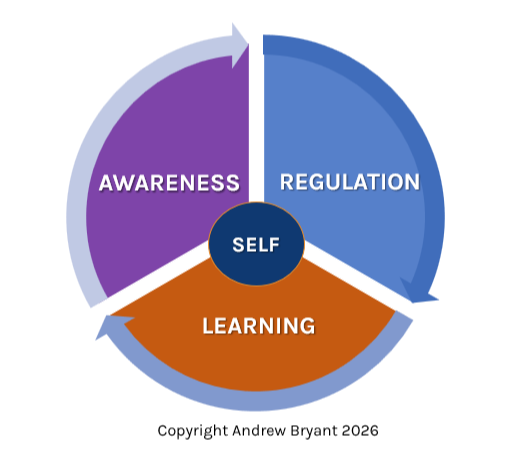
The pattern repeats everywhere I've worked. The leaders who get better aren't the ones who learn the most frameworks. They're the ones who develop three specific capacities: the 3 Drivers of Self-leadership: self-awareness, self-regulation, and self-learning. Everything else - the strategic thinking, the presence, the influence- gets built on top of those three.










The Skills Question Everyone Gets Backward
Self-Leadership Workshops for Leadership Development →Ask most senior leaders what skill they should develop next, and they'll name something tactical: sharper board communication, better cross-functional influence, faster decision-making under ambiguity. Those aren't wrong. They're just downstream.
Here's the question that actually moves the needle: under real pressure, in front of the board, in a room full of peers who don't report to you, do you know what you default to? Most executives don't. They know what they're supposed to do. They don't know what they actually do when the stakes are real, because almost nobody at that level is watching themselves closely enough to notice the gap.
That gap is where leadership effectiveness lives or dies. An executive who intends to stay composed under pressure but starts overriding their team's decisions the moment a board deadline slips isn't short on knowledge. They're short on self-regulation, the capacity to notice the pull toward the old pattern and choose differently in the moment, not after the fact in a debrief.
So the skill to develop first isn't a technique. It's the habit of noticing your own patterns clearly enough to interrupt them, especially in the moments that carry real organizational consequences: the board meeting, the reorg announcement, the negotiation where you're the most senior person in the room. Everything else, cross-functional influence, board communication, high-stakes decision-making, gets easier once that's in place, because you're finally working with accurate information about how you actually operate instead of how you assume you operate.
Once that self-regulation is in place, the tactical layer stops being guesswork. The specific plays for the conversations where it gets tested, delegating without micromanaging, giving feedback that actually lands, are laid out in The New Leadership Playbook.
Start With What You Can't See
Leadership Coaching to Reveal Blind Spots →Self-awareness sounds like something you either have or don't. It isn't. It's a skill, and like any skill, it's built through specific practice, not through good intentions.
The uncomfortable part is that your blind spots are, by definition, invisible to you. You can't think your way to them. You have to build mechanisms that surface them: structured reflection, honest feedback loops, and the discipline to actually use what they tell you instead of explaining it away.
I've written a full breakdown of how to do this, including the specific practices I use with coaching clients, in Self-Awareness at Work: The Leadership Skill You Think You Have (But Probably Don't). If blind spots are the piece you're stuck on, start there.

Thinking Like an Executive Means Solving a Different Problem
Leadership and Human Potential →Here's what nobody tells new executives: strategic thinking isn't a bigger version of tactical thinking. It's a different kind of problem-solving entirely, and the switch trips up almost everyone who's promoted into it.
Tactical thinking optimizes what's in front of you. Strategic thinking asks whether you're solving the right problem in the first place. A tactical leader gets better at answering "how do we hit this quarter's target." A strategic one starts asking "is this the target that actually matters, two years from now, or are we optimizing for the wrong thing entirely."
That shift doesn't happen automatically with a title change. I've watched newly promoted executives keep operating at the tactical level for years after their role demanded something else, because nobody taught them the difference, and their own instincts kept pulling them back to the work that used to earn them recognition.
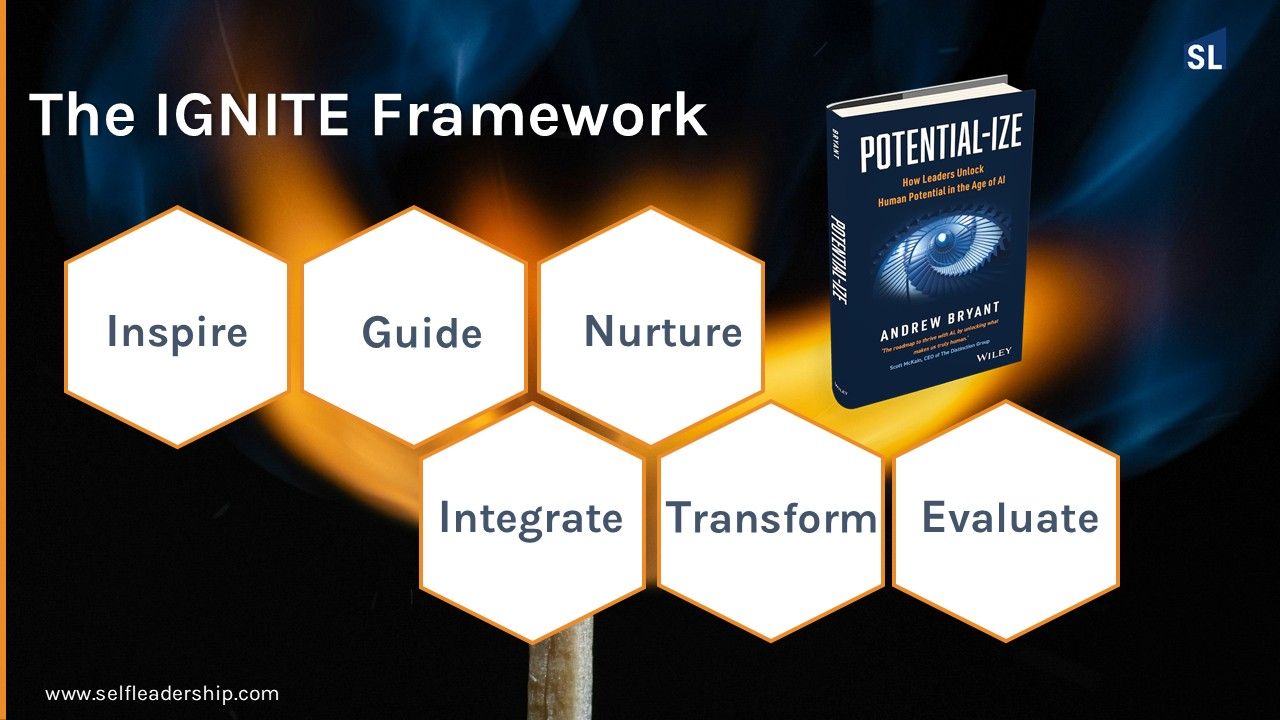
Strategic thinking is one of the six elements inside the IGNITE Framework, the model I built specifically for leading in a moment where judgment, not execution, is what's actually scarce. If you want the full framework, not just this piece of it, that's covered in depth on the IGNITE Framework page.
Presence Is Part of This Too
What is Executive Presence →Executive presence gets lumped in with charisma, and that's a mistake. It's not about being magnetic in a room. It's about whether your composure, your communication, and your decisions under pressure signal that people can trust you with more responsibility than you currently have.
It's also one of the more common places leadership development stalls, because it's hard to coach in the abstract. I've built a full guide to what executive presence actually is, the specific behaviors that build it, and how it shows up differently in virtual and hybrid settings, at Executive Presence: What It Is, Why It Matters, and How to Build It.
What Transformational Leadership Actually Requires
Hire a Leadership Speaker →"Transformational leadership" gets used loosely, usually to describe someone inspiring. That's part of it, but it undersells what's actually required.
A transformational leader changes what a team believes is possible, and then builds the conditions for people to act on that belief without the leader personally driving every decision. That second part is where most people who call themselves transformational actually fall short. Inspiring a room is a moment. Building an organization that keeps performing at a higher level after you've stepped back is a structure.
That structure only holds if the leader has done the self-leadership work first. You cannot build a team's self-regulation if you haven't built your own. You cannot teach strategic thinking you haven't practiced under real pressure. Transformational leadership isn't a separate skill from everything above. It's what happens when self-awareness, self-regulation, and self-learning are strong enough in one person that they start showing up in everyone around them.
The Leadership Skill Underneath All of These
Book a Call to Discuss Leadership Development →If there's one thread running through every question on this page, it's this: leadership skill and self-leadership are not the same thing, and most development programs only address the first one.
Self-leadership is the practice of intentionally directing your own thinking, feeling, and behavior toward what you actually want to achieve, instead of reacting to whatever the day throws at you. It's the foundation everything above sits on top of. I've written the full definition, the research behind it, and how to start developing it at What Is Self-Leadership?.
Leadership Development FAQs
How do I become a better leader?
What makes a good leader?
What leadership skills should I develop first?
How is self-leadership different from leadership skills training?
How long does it take to become a more effective leader?
Can executive presence be learned, or is it innate?
What's the difference between a strategic leader and a tactical one?
Ready to Develop Your Leadership
With Someone in Your Corner?
The paradox about self-leadership is that nobody does it alone.
Reading about self-awareness and actually seeing your own blind spots are two different things.
That's what coaching and workshops are for.