
Self-Leadership: The Mental Health Strategy Hidden in Plain Sight
May 29, 2026
Why self-leadership in the workplace is the most important resilience skill your organization is not training for.
By Andrew Bryant, Founder of Self Leadership International | Author of POTENTIAL-IZE (Wiley, 2026)
Before I wrote books, before I coached executives, before I was a keynote speaker in over 40 countries, I was a physiotherapist working with elite athletes.
What I learned in clinics and hospitals shaped everything that came after.
I saw bodies that were physically sound but performing badly because the mind was running a different program. I saw injuries heal quickly when the athlete owned the recovery, and injuries linger when they do not. I learned very early that you cannot treat the body without treating the relationship a person has with themselves.
That insight became the foundation of my work as a self-leadership expert. And after 25 years of working with leaders inside companies like Microsoft, Singapore Airlines, Airbus, and Deloitte, I am more convinced than ever that what I saw as a therapist is now the single most important capability for the modern workforce.
Self-leadership is not a soft skill. It is the foundation of mental health, resilience, and sustainable high performance in the workplace.
And almost no one is teaching it as such.
The Crisis No One Is Solving
Let me give you the numbers, because they are sobering.
According to Gallup's State of the Global Workplace 2025 report, only 21 percent of employees globally are engaged at work. Disengagement and lost productivity cost the global economy $438 billion last year alone. The World Health Organization estimates that depression and anxiety cost the global economy $1 trillion per year in lost productivity.
Mental Health UK's Burnout Report 2026 found that nine in ten UK adults experienced high or extreme levels of pressure and stress in the past year. DHR Global's 2026 Workforce Trends Report shows that 83 percent of knowledge workers report some degree of burnout. Mind Share Partners found that 76 percent of US workers report burnout, with 53 percent at moderate to severe levels.
And here is the data point I want you to sit with: 48 percent of US employees have left a job for reasons tied to their mental health. Two-thirds of those departures were voluntary.
People are not just struggling. They are walking out.
Organizations are responding the way they always do. More Employee Assistance Programs. More wellness apps. More mindfulness Mondays. More counseling referrals. These are not bad things. They are necessary things.
But they are not a strategy. They are a response.
We have confused mental health treatment with mental health strategy. Treatment is what you do after someone breaks. Strategy is what you build, so fewer people do.
The Upstream Solution
Public health solved a version of this problem a century ago.
Cholera outbreaks in 19th-century London were not solved by better hospitals. They were solved by John Snow tracing the contamination to a single water pump on Broad Street. Clean water upstream prevented more deaths than any downstream treatment ever could.
The same principle applies to mental health at work.
Most of what organizations call mental health support sits downstream. It is what we do after the burnout, after the anxiety, after the depression, after the resignation. It is necessary. It is also expensive, reactive, and arrives too late for many of the people it is meant to help.
Self-leadership is the upstream intervention.
It is the practice that protects mental health before the crisis. It is the skill that builds resilience before resilience is required. And it sits inside every employee in your organization, waiting to be developed.
What Self-Leadership Actually Is
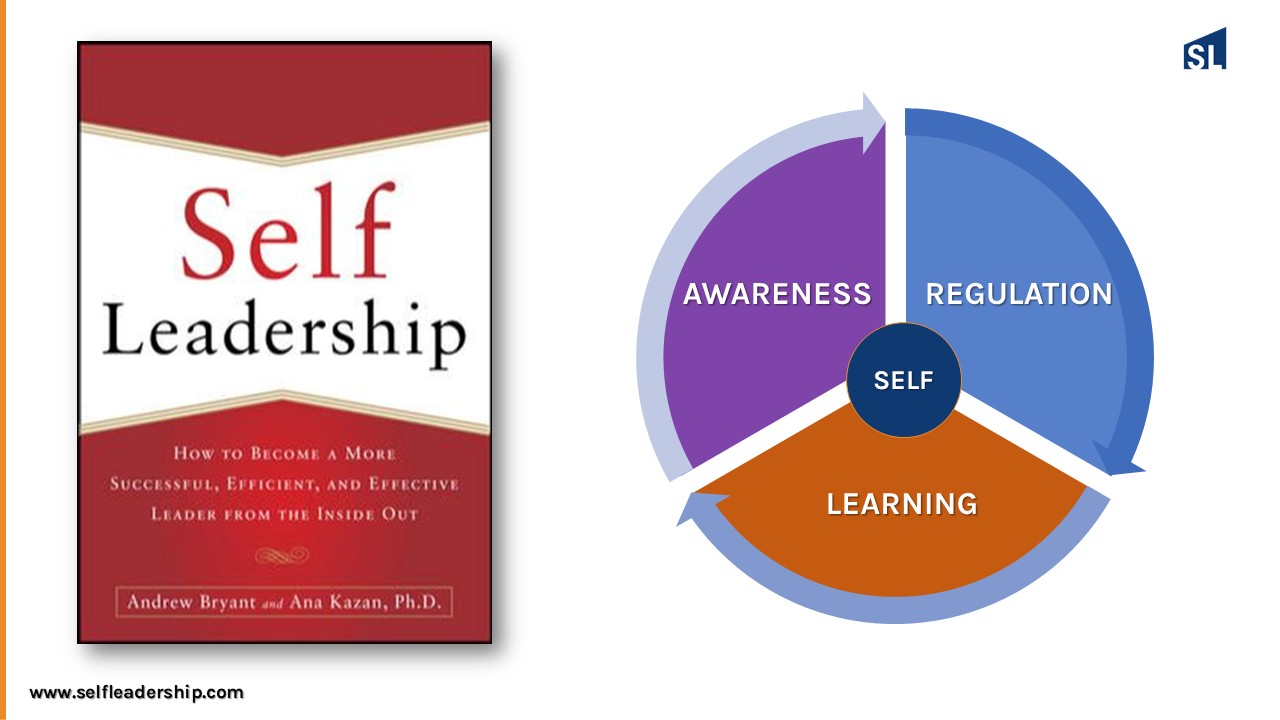
In the academic text I co-authored with Ana Kazan, Self Leadership: How to Become a More Successful, Efficient, and Effective Leader, From the Inside Out (McGraw-Hill, 2012), we defined the practice as follows:
"Self-leadership is the practice of intentionally influencing your thinking, feeling, and actions toward your objectives."
That definition matters because it is precise. Self-leadership is not positive thinking. It is not motivation. It is not self-help. It is the deliberate, observable practice of influencing the three things that determine how a human being shows up: thinking, feeling, and action.
Notice that the definition contains the mental health protective factors that decades of psychological research have validated. Cognitive Behavioral Therapy is, at its core, the influencing of thinking. Emotional regulation is the influencing of feeling. Behavioral activation is the influencing of action. Self-leadership is not the absence of mental health support. It is the foundational skill that makes mental health support work.
The 2012 book has now been cited in more than 200 peer-reviewed research papers. The construct is not pop psychology. It is one of the most empirically grounded frameworks for personal effectiveness available. And yet most organizations have a mental health strategy and a leadership strategy without ever building a self-leadership strategy underneath them.
That is the gap.
The Self-Leadership Resilience Stack
Here is the framework I use with leaders, and it is the framework I want you to take into your own life and your own organization. I call it the Self-Leadership Resilience Stack. It has three layers, and you build it from the bottom up. It's also the practical answer to a question I explore from a different angle in The Resilience Definition Paradox: dictionary resilience means bouncing back to your original shape, but real resilience means bouncing forward. This Stack is how you actually build that capacity, layer by layer.
Layer One: Self-Awareness
You cannot regulate what you cannot observe.
Every credible model of mental health, from CBT to Acceptance and Commitment Therapy to positive psychology, starts in the same place. You have to see the program before you can rewrite it. Most people live inside their thoughts and feelings as if they are reality. Self-leadership begins the moment you realize they are data.
The practical tool here is the Evening Review, drawn from the Stoic philosopher Seneca, who wrote about it two thousand years ago. Each night, ask yourself three questions:
1. What did I do well today?
2. What could I have done better?
3. What will I do differently tomorrow?
Five minutes. No app required. No subscription. The Stoics understood what cognitive science now confirms: reflection is the engine of growth. Without it, you repeat the same patterns. With it, you see them, and seeing them is the first step to changing them.
Layer Two: Emotional Regulation
Awareness without regulation is just rumination.
The second layer of the stack is the capacity to influence your emotional state under pressure. This is where burnout is prevented, where reactivity is replaced with response, and where the relationship between stress and performance becomes manageable rather than crushing.
Three practices to know.
The first is the View from Above, again from the Stoics, the same discipline behind the Stockdale Paradox. Marcus Aurelius used it daily. When you feel the emotional intensity rising, zoom out. What does this difficulty look like from one year away? From ten years away? From the perspective of the entire arc of your life? The neuroscience is now clear: this kind of perspective-shifting activates the prefrontal cortex and cools the limbic response. You can do it in 60 seconds.
The second is Negative Visualization, or what the Stoics called premeditatio malorum. You briefly imagine what could go wrong, not to catastrophize but to prepare. Counterintuitively, this practice reduces anxiety rather than increasing it. When you have already mentally rehearsed the worst case, the worst case loses its power.
The third is WOOP, a tool developed by NYU and University of Hamburg psychologist Gabriele Oettingen after more than 20 years of research into how human beings actually change behavior. WOOP is an acronym best used when you have a goal or a change you want to make, but keep failing to follow through.
- W is for Wish: Name a specific, meaningful, achievable change you want. Not "I want to be healthier." Something concrete, like "I want to walk for 30 minutes before email, four mornings this week."
- O is for Outcome: Vividly imagine the best result of achieving that wish. What does it feel like? What becomes possible? Spend a moment in that image.
- O is for Obstacle: Now name the most likely internal obstacle. Not your busy schedule. Not your difficult boss. The thought, feeling, or habit inside you that will most reliably get in the way. This is the Stoic move. The external is real, but the internal is what you can influence.
- P is for Plan: Complete this sentence: "If [the internal obstacle occurs], then I will [specific action]." That is your if-then plan, and the research is striking. People who form if-then plans are two to three times more likely to follow through on their goals than those who simply set goals.
WOOP works because it links a wish to a realistic obstacle and a pre-decided response. It is mental contrasting plus implementation intention, both of which have been validated across hundreds of studies in education, health behavior, work performance, and clinical settings. In self-leadership, this is called mental cueing and is one of the most reliable tools I know. If you want a structured worksheet that applies this same wish-to-plan logic to a bigger goal, my seven-step goal setting worksheet covers similar ground in more depth.
I lost my business in 2000. It was the worst professional experience of my life. What I learned, and what I now teach, is that resilience is not the absence of pain. It is the relationship you build with pain in advance, so that when it arrives, you are not undone by it.
Layer Three: Psychological Capital
The third layer of the stack is what positive organizational psychologist Fred Luthans calls Psychological Capital, or PsyCap. It is the most empirically validated framework I know for the inner resources that sustain mental health and performance over time.
PsyCap has four components, easy to remember by the acronym HERO:
- Hope: The capacity to set meaningful goals and generate multiple pathways to reach them.
- Efficacy: The belief that your effort will produce results in the specific domain you are working in.
- Resilience: The capacity to recover from setbacks and grow through adversity.
- Optimism: A realistic, flexible attribution style that sees setbacks as temporary and specific rather than permanent and pervasive.
What I love about Luthans' work is that he has demonstrated, in repeated intervention studies, that PsyCap can be developed in training programs as short as two to three hours. One of his studies with engineers and technicians showed a 2 percent productivity gain from a PsyCap intervention, translating to a return on investment of over 200 percent.
This is the upstream intervention that pays back.
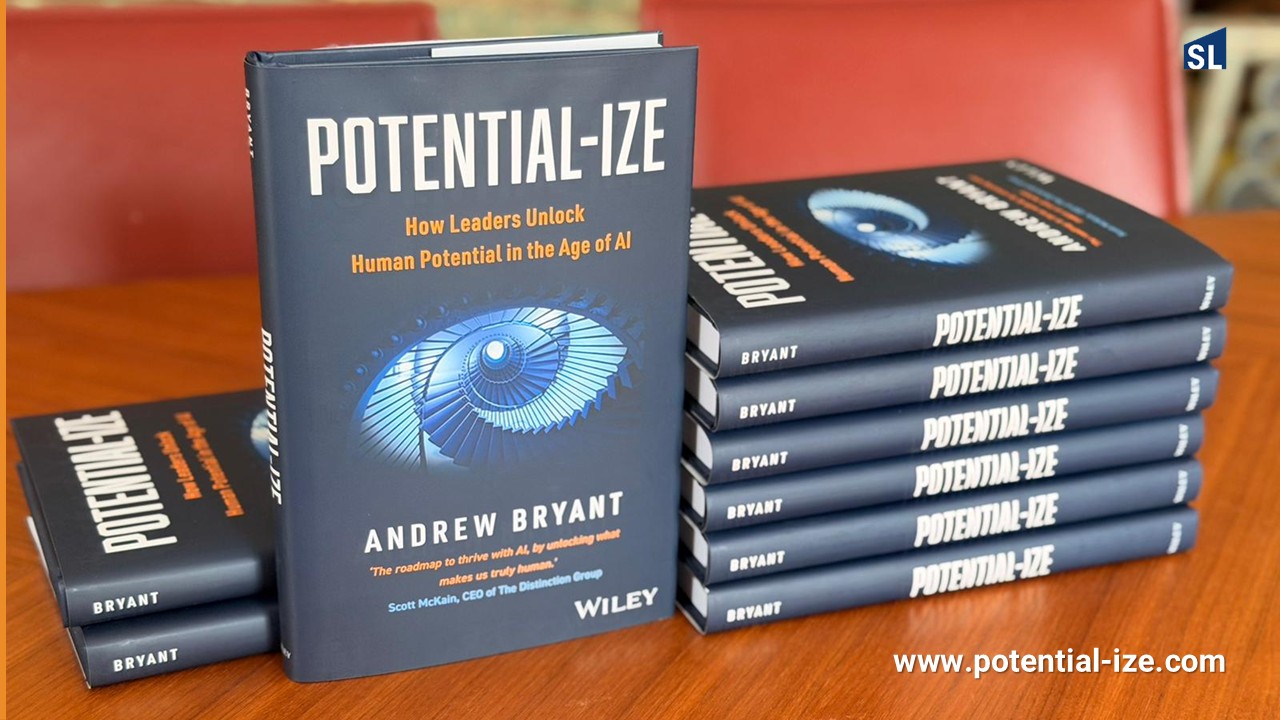
In my latest book, POTENTIAL-IZE: How Leaders Unlock Human Potential in the Age of AI, I show how PsyCap maps directly onto the Potential-ize Formula: Capacity multiplied by Opportunity multiplied by Willingness. PsyCap is what sustains the W. Willingness is not a personality trait you either have, or you do not. It is a set of developable psychological resources. That is the most liberating reframe I can offer any leader: the willingness of your people is not their problem. It is your strategy.
This is the message at the heart of The First Responder, the keynote I deliver to leadership teams around the world on mental health and resilience: self-leadership in the workplace is a system, not a slogan. If you would like to bring this conversation into your organization, you can contact me directly.
The AI Dimension
I cannot write about mental health and resilience in 2026 without naming what is happening beneath it all.
Artificial intelligence is displacing routine cognitive work at a pace nobody fully predicted. Knowledge workers are looking at tools that do in seconds what used to take them hours. The identity question is sharpening: who am I, and what is my value, if the machine can do what I do?
That question is not just a productivity question. It is a mental health question.
Without self-leadership, the AI age becomes an existential threat. People become passengers in their own careers, anxious about a future they cannot see, paralyzed by a change they cannot influence.
With self-leadership, the same conditions become an invitation. People become drivers, choosing what to amplify, what to delegate to the machine, and what fundamentally human capacities to deepen. The technology becomes a tool rather than a verdict.
This is why I argue that the more capable artificial intelligence becomes, the more dependent organizations become on the self-leadership of their people. Someone has to decide what the technology is for. Someone has to bring the judgment, the meaning, the relationships, the values. The technology cannot supply any of those things. People with self-leadership can.
Practical Takeaways: Building Self-Leadership and Resilience This Week
If you are reading this and asking what to actually do, here is the answer. You do not need a sabbatical or a retreat. You need to begin.
- Tonight, start the Evening Review. Five minutes before sleep. Three questions. Do it for seven days and notice what changes.
- This week, run one View from Above. Pick the difficulty that is occupying your mind right now. Zoom out. How will this look in twelve months? What will you wish you had done? Make one decision from that perspective.
- This week, run one WOOP. Pick one wish that matters to you. Imagine the best outcome in vivid detail. Name the most likely internal obstacle, not the external one. Write the if-then plan. That single practice, repeated, is one of the most reliable predictors of behavior change in the research literature.
- This month, audit your Psychological Capital. Score yourself, honestly, on Hope, Efficacy, Resilience, and Optimism. Where is the gap? That is where you focus next.
- This quarter, build the same stack in your team. Self-leadership is contagious. When leaders practice it, their teams begin to practice it. When teams practice it, organizations change.
The Real Question for Leaders wanting to build Self-Leadership in the Workplace
If you lead people, here is the question I want you to sit with.
Your organization probably has a mental health strategy. You probably have an EAP, a wellness budget, and a Mental Health Awareness Week. Good. Keep all of it.
But ask yourself this: do you have a self-leadership strategy?
Are you developing, in every employee, the foundational capacity to influence their own thinking, feeling, and action?
Are you building the upstream resilience that prevents the downstream crisis? Are you treating self-leadership as a skill, as trainable, as measurable, as the strategic asset it actually is?
If the answer is no, you are not alone. Almost no one is. Which is precisely why this is the next frontier of leadership development, and why the organizations that get this right over the next three years will pull decisively ahead of those that do not.
Mental health at work is not solved by more support. It is solved by more agency. Resilience is not granted. It is built. And the place to build it is inside the person who has to live with the pressure of modern work, which is to say, all of us.
Self-leadership is not separate from mental health.
It is the strategy.
Bring This Conversation to Your Organization
If this framework lands for you, the natural next step is to bring it into the room with your leadership team. I deliver this content as a keynote (The First Responder), a workshop, and a leadership development program, customized for your context and audience.
I work with organizations across Europe, the United States, Asia, and the Middle East, and I would be glad to discuss how this message fits your goals.
Frequently Asked Questions
What is self-leadership?
Self-leadership is the practice of intentionally influencing your thinking, feeling, and actions toward your objectives. The definition was formalized by Andrew Bryant and Ana Kazan in the 2012 academic text Self Leadership (McGraw-Hill), now cited in more than 200 peer-reviewed research papers.
Why is self-leadership important for mental health in the workplace?
Self-leadership is the upstream intervention that protects mental health before a crisis arrives. It develops the foundational capacity to influence thinking, feeling, and action, the same factors validated in Cognitive Behavioral Therapy and positive psychology research. Organizations that build self-leadership reduce the downstream costs of burnout, disengagement, and mental-health-related attrition.
What is the difference between mental health treatment and mental health strategy?
Treatment is what an organization does after someone breaks: EAPs, wellness apps, counseling referrals. Strategy is what it builds so fewer people break in the first place. Most workplace mental health spending sits downstream, in treatment. Self-leadership is the upstream strategy.
How does self-leadership build resilience?
Self-leadership builds resilience through three developable layers: Self-Awareness, Emotional Regulation, and Psychological Capital. Together they develop the inner resources of Hope, Efficacy, Resilience, and Optimism that sustain performance under pressure. Andrew Bryant calls this model the Self-Leadership Resilience Stack.
What is the Self-Leadership Resilience Stack?
A three-layer framework for building resilience from the inside out, built bottom-up: Self-Awareness (seeing your own thinking and feeling clearly before you can regulate it), Emotional Regulation (influencing your emotional state under pressure), and Psychological Capital (the Hope, Efficacy, Resilience, and Optimism that sustain performance over time).
What is Psychological Capital (PsyCap)?
Psychological Capital, or PsyCap, is a positive organizational psychology framework developed by Fred Luthans describing four developable inner resources that sustain performance and wellbeing, remembered by the acronym HERO: Hope, setting meaningful goals and generating multiple pathways to reach them; Efficacy, the belief that your effort will produce results; Resilience, the capacity to recover from setbacks; and Optimism, a realistic, flexible attribution style that treats setbacks as temporary rather than permanent.
What is the Evening Review technique?
A five-minute nightly reflection practice drawn from the Stoic philosopher Seneca. Before sleep, ask three questions: What did I do well today? What could I have done better? What will I do differently tomorrow? No app or subscription required, just consistent reflection.
What is the View from Above technique?
A 60-second perspective-shifting exercise used daily by Marcus Aurelius. When emotional intensity rises, zoom out and ask what the difficulty will look like from one year away, or ten. The shift activates the prefrontal cortex and cools the limbic stress response.
What is the WOOP method and how does it support self-leadership?
WOOP is a behavior change tool developed by NYU psychologist Gabriele Oettingen. It stands for Wish, Outcome, Obstacle, Plan. You identify a meaningful wish, vividly imagine the best outcome, name the most likely internal obstacle, and form an if-then plan. Validated across more than 20 years of research, WOOP is one of the most reliable predictors of follow-through on behavior change.
How do I start practicing self-leadership this week?
Begin with the Evening Review: five minutes before sleep, asking three questions. What did I do well today? What could I have done better? What will I do differently tomorrow? Add a View from Above exercise mid-week for emotional regulation, and run one WOOP exercise on a goal that matters. These three practices build the foundation of the Self-Leadership Resilience Stack.
Andrew Bryant is a globally recognized self-leadership expert, the founder of Self Leadership International, and a Certified Speaking Professional (CSP).
He is the author of five books, including POTENTIAL-IZE: How Leaders Unlock Human Potential in the Age of AI (Wiley, 2026) and the academic text Self Leadership (McGraw-Hill, 2012), co-authored with Ana Kazan. Cited in more than 200 peer-reviewed research papers.
Andrew has worked with leaders in over 40 countries and holds faculty associations with MIT and Singapore Management University.
Selected References
- Bryant, A., & Kazan, A. L. (2012). Self-leadership: How to become a more successful, efficient, and effective leader from the inside out. McGraw-Hill.
- Bryant, A. (2026). POTENTIAL-IZE: How Leaders Unlock Human Potential in the Age of AI. Wiley.
- Gallup. (2025). State of the Global Workplace 2025.
- Mental Health UK. (2026). The Burnout Report 2026.
- Mind Share Partners. (2025). Mental Health at Work Report.
- DHR Global. (2026). Workforce Trends Report.
- Luthans, F., Youssef-Morgan, C. M., & Avolio, B. J. (2015). Psychological Capital and Beyond. Oxford University Press.
- Oettingen, G. (2014). Rethinking Positive Thinking: Inside the New Science of Motivation.
- World Health Organization. (2024). Mental Health at Work: Policy Brief.
Turn Insight Into ActionReading about leadership can change what you know.Self-leadership changes what you do.Develop your leadership effectiveness → Explore Self-leadership Discover your leadership strengths & gaps → Choose an Executive Coach Unlock the potential of your team → Workshops & Masterclasses Ignite your event or conference → Book Andrew Bryant as your Leadership Speaker "Prescription without diagnosis is malpractice" |